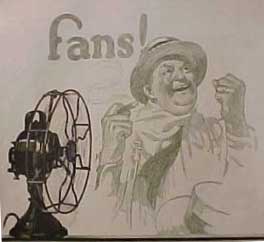
Fans of the Swing Era
The following links will direct you to topics discussed on this page:
- Vornado Fan
- Samson Safe Flex Fan
- Diehl/Singer Ribbonaire Fan
- General Electric Pancake Fan
- General Electric Prepayment Fan
- Progress Rubber Bladed Fan
- Very Old Ceiling Fans
- Restoring a Diehl Table Fan
- Robbins and Myers Desk Fan
- Roto Beam Electric Air Circulator
- Emerson Table Fan Type 73648AK
- Hunter-Century Floor Fan
- General Electric Hospital Fan
- Freshn'd Aire Hassock/Ottoman Fan
- "Zero" Drug Store Fan
- General Electric Wall Fan
- Ceiling Fan at Fanelli's Cafe (SoHo, NYC)
- Tropic Aire Heater
- Magicair Heater
- Universal heater
- Fan Wiring Diagrams -- an enormous collection
Note from July, 2009: LATELY, we have had some trouble connecting to the Fan Collectors website (www.fancollectors.org) and have a suspicion that it may have gone out of business. They used to be a wonderful source of information.
In addition to fan stuff, we have a Calendar of Swing Dancing in DC, a Directory of Vintage Clothing Stores and a Guide to 1940s Collectibles. Thanks for tuning in! Feel free to Contact Me if you have questions or want to share photographs and "shoot the breeze" with other fan lovers.
Cool Breeze from Hot Fans... and Hot air from cool Room Heaters as well
The Vornado Fan
Posted October 12, 2010
We owe these pictures to our reader William Graessle, who writes:
"... Hello, my name is Billy Graessle and I'm 18 years old. I have collected vintage items since I was a little kid. I just found your site today searching for Westinghouse roasters because I wanted to know more about them and there was your site. I nocticed in your fan section that you don't have any vornado fans. Vornados are in my opioun, the best made fan ever. They manufactured them between 1945 and 1959 by a company called O.A. Sutton. ...
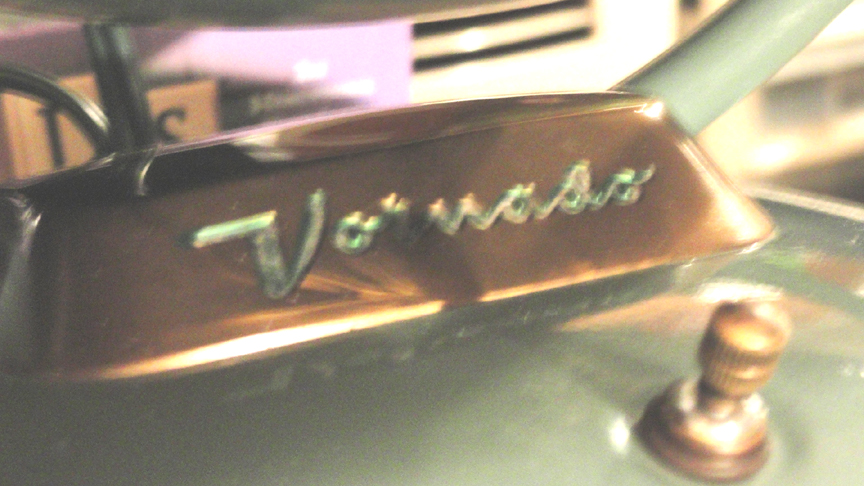

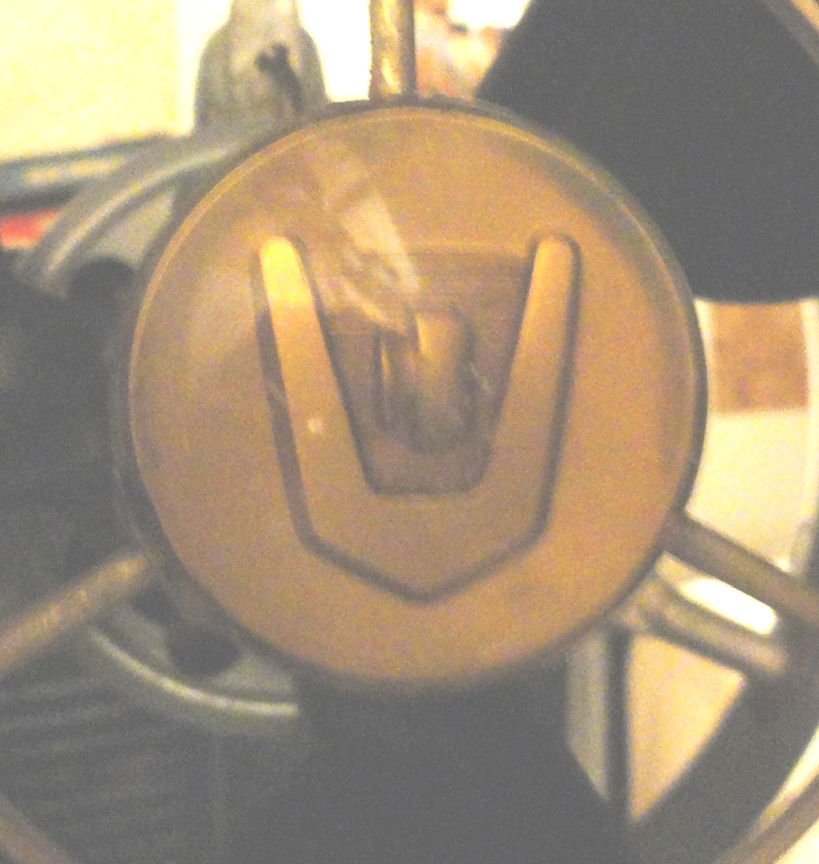
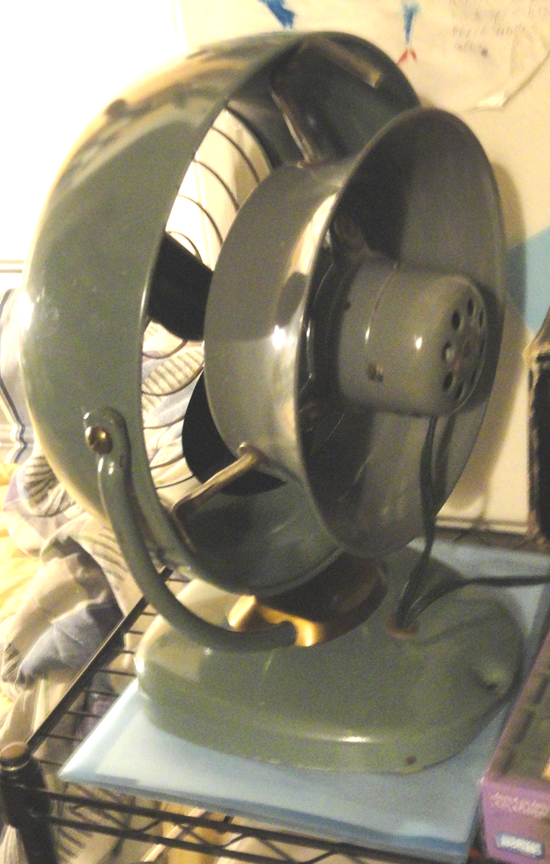
The Vornado Fan
top: Vornado logo and switch
l:1949 Vornado fan, two speed
m: Vornado emblem on grill
r: Twin-cone construction
This is Model B24C1-1
Click here to look at another type of collectible, or keep on scrolling for more Fans.

The Samson Safe-Flex Fan
Click Either Photo to Enlarge
Posted 12-23-2008
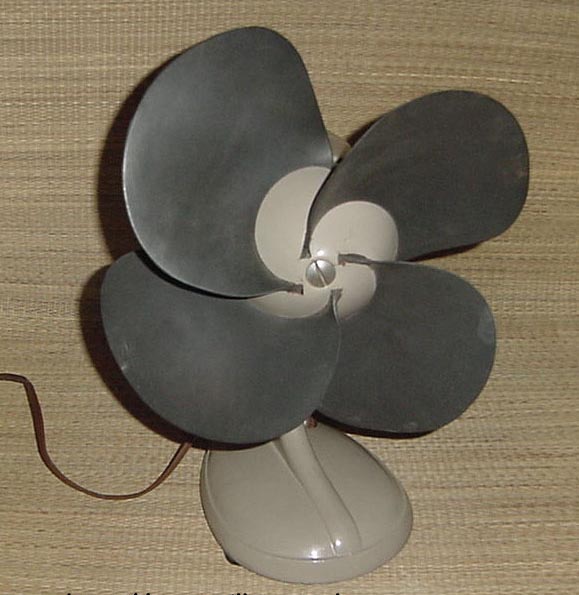
This is a Samson Safe-Flex fan, noted for its rubber blade. This is Model No. 1046 N with a 10 inch blade. It was made by Samson United Corporation of Rochester N.Y. It is 14" tall overall. If you are considering buying one of these, make sure that all 3 rubber feet are present and in good condition.
This fan was the subject of a 1947 LIFE Magazine article devoted to ultra-modern appliances. We have also found an advertisement for this fan to give you some idea of the cost of the item in 1938. Multiply by about 30 to estimate the 2008 equivalent price. Sometime in the 1950s, the Samson company was taken over by Dayton Electric who continued to produce the Safe-Flex fan.
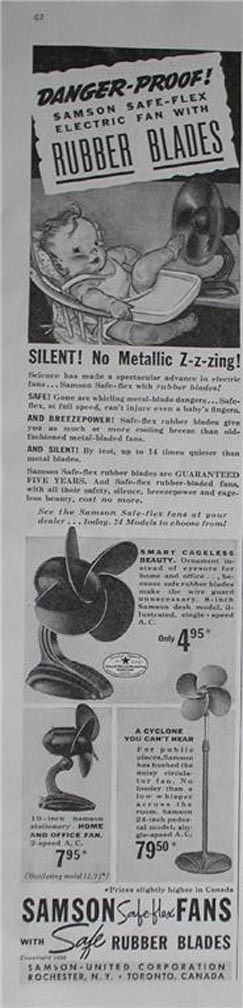
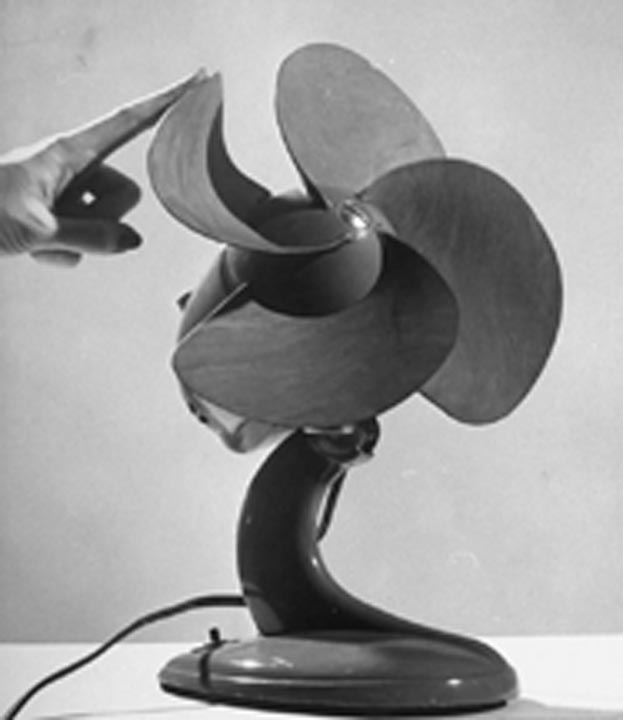
The Samson Safe-Flex Fan in LIFE Magazine
LIFE Magazine Photo by Margaret Holmes
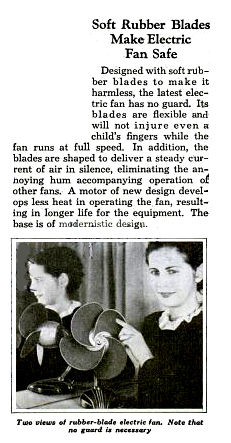
Article from Popular mechanics June, 1936 Click to Enlarge
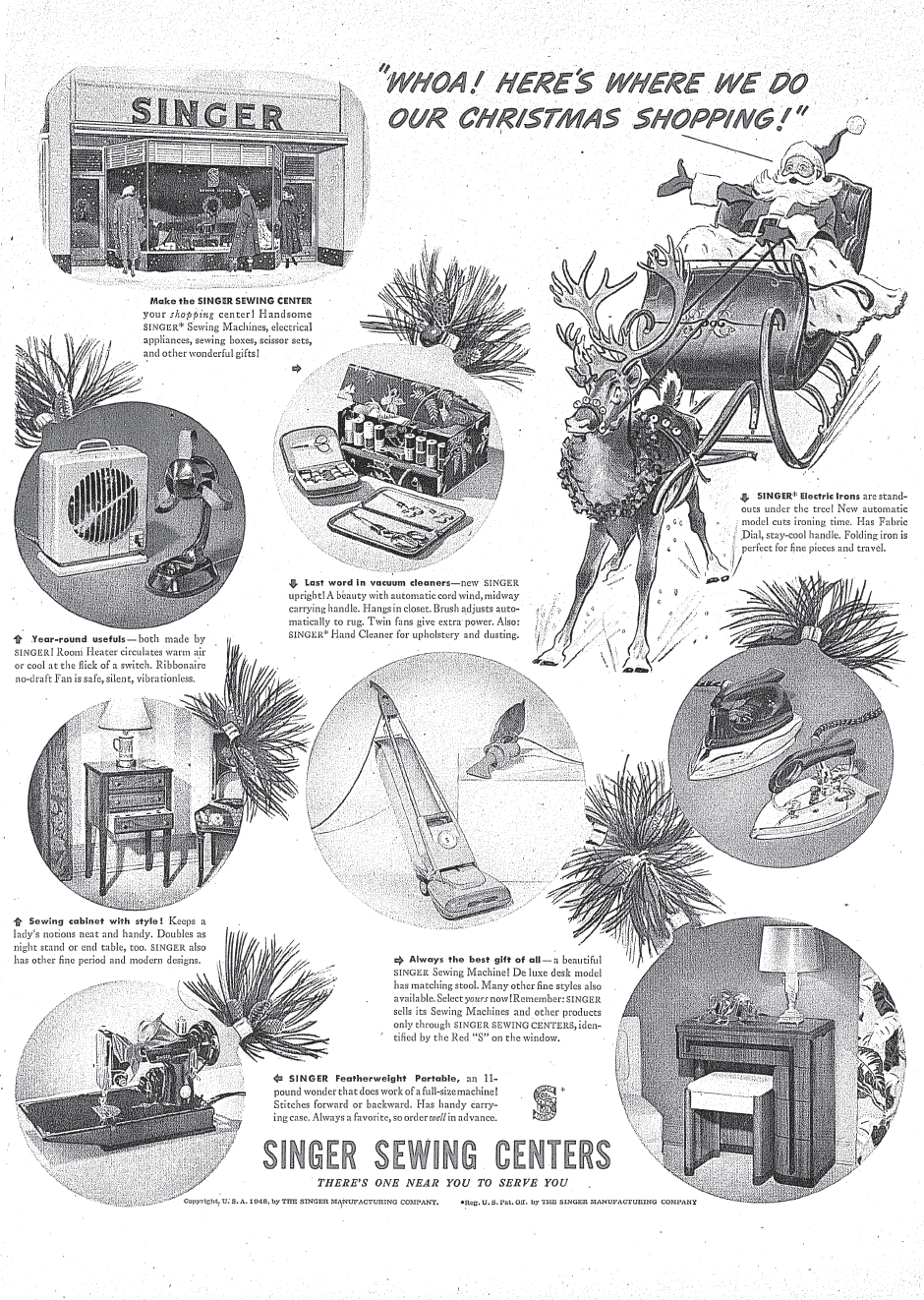
A number of companies produced fans with "safety" flexible blades. Of note was the "Ribbonaire" fan that used strips of fabric for the blades. These fans were made by both the Diehl Company and the Singer Corporation. This type of fan is very desirable to collectors.
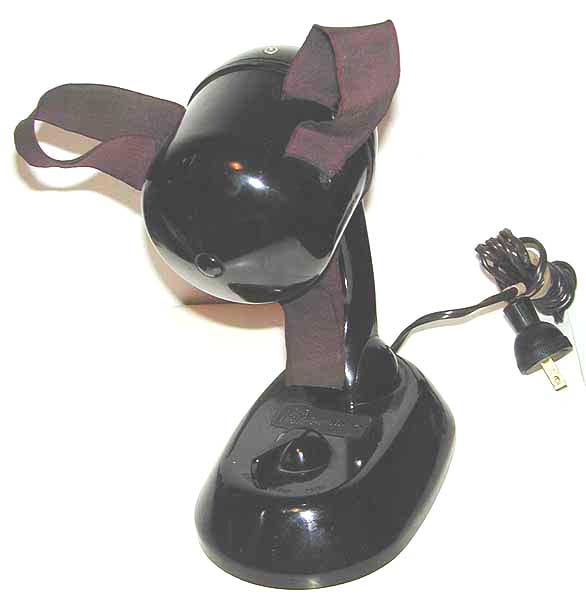
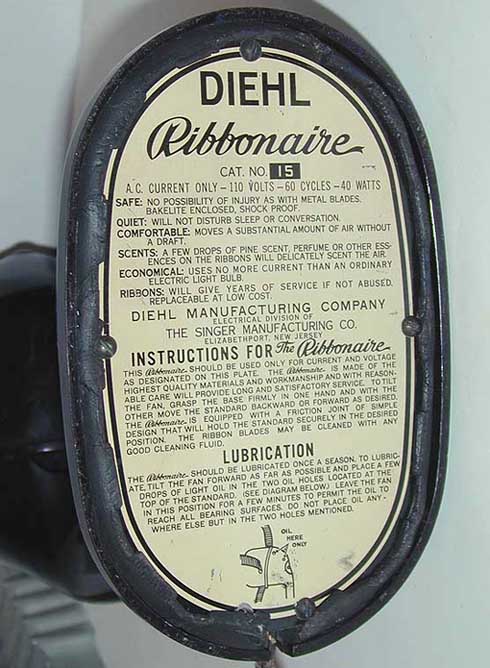
The Diehl Version of the Ribbonaire Fan
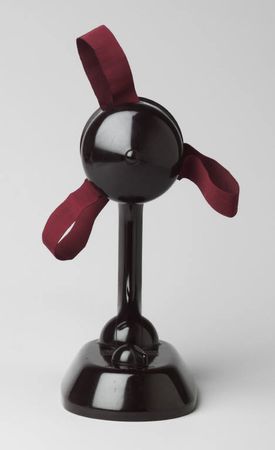
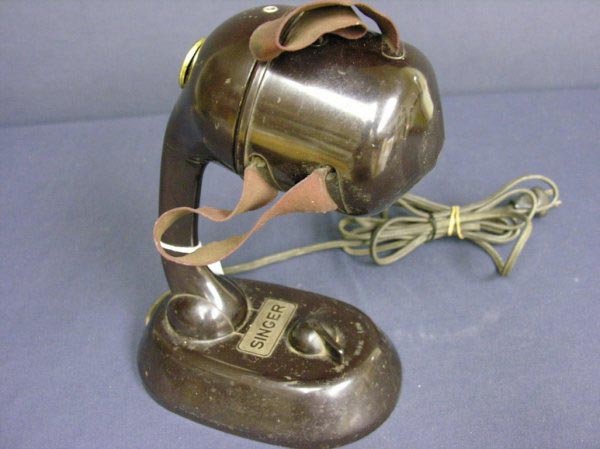

The Singer Version of the Ribbonaire Fan
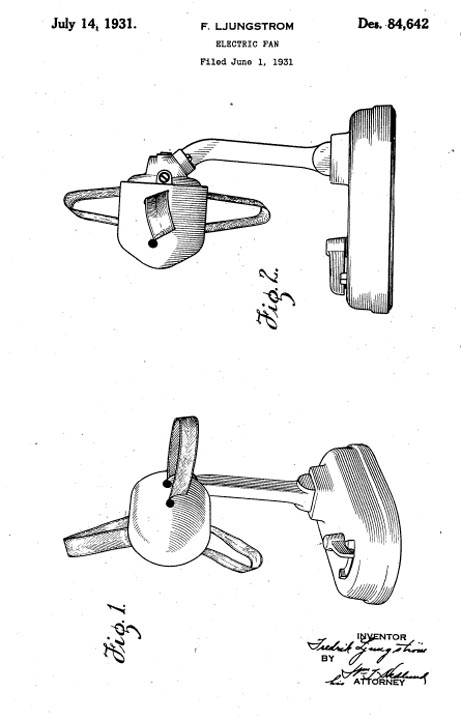
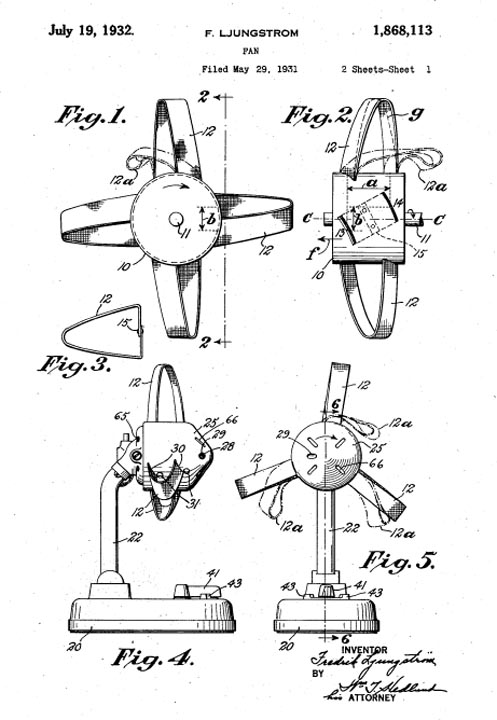
Fred Lindstrom's Patents for the Ribbonaire Fan
(l.) Design - D84642 (r.) Utility 1868113
Advertisement for the Deco Singer Ribbonaire Fan
See our Furniture Page for details on the Art Deco Sewing Machine in the ad
Click Any Photo to Enlarge It
Click Here to learn how to get Free Patent Drawings
You can go to the website of the American Fan Collectors Association to learn a whole lot more about fans.
Click here to look at another type of collectible, or keep on scrolling for more Fans.
The General Electric Pancake Fan
Posted March 3, 2009
We come to the "pancake" fan indirectly, by way of our GE Model D-12 Toaster. Specifically, the toaster is dangerous and the conditions under which it was assembled are likewise threatening.
Here is a photograph of ladies assembling the D-12. You'll note that in the background to the right is a fan with no blade guard. This is a GE "Pancake" Fan named for its outsized motor. However, a look at the back of the fan shows that it was "hot wired". Thus, employees stood to lose fingers or be electrocuted. Annoying as it is, there is a definite need for OSHA.
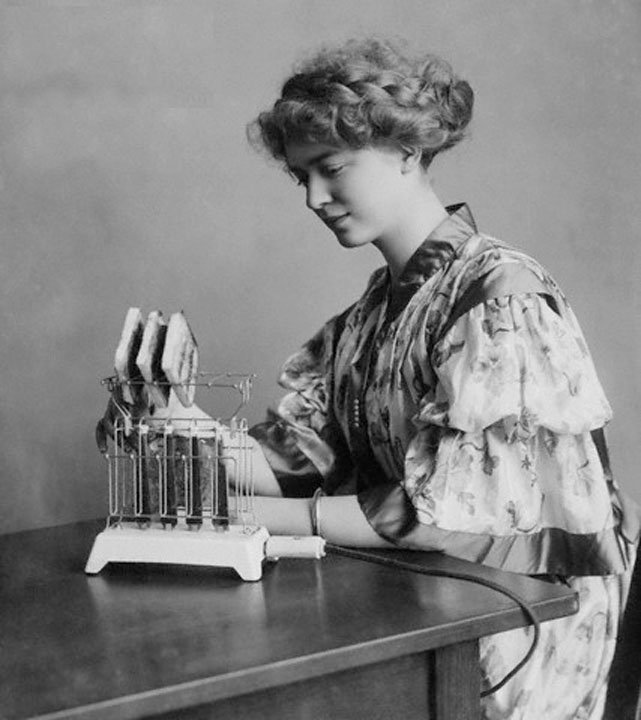

Using and Assembling the GE Model D-12 Toaster
Women were used because they had "nimble fingers"
and worked for next to nothing...
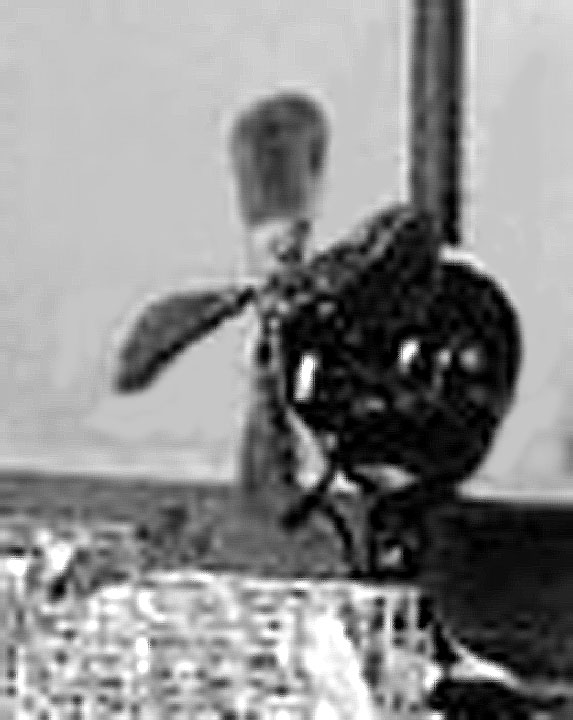
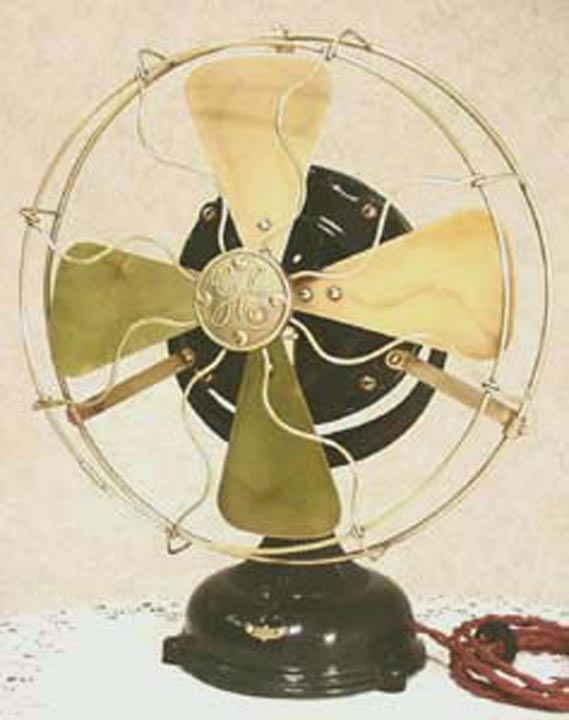
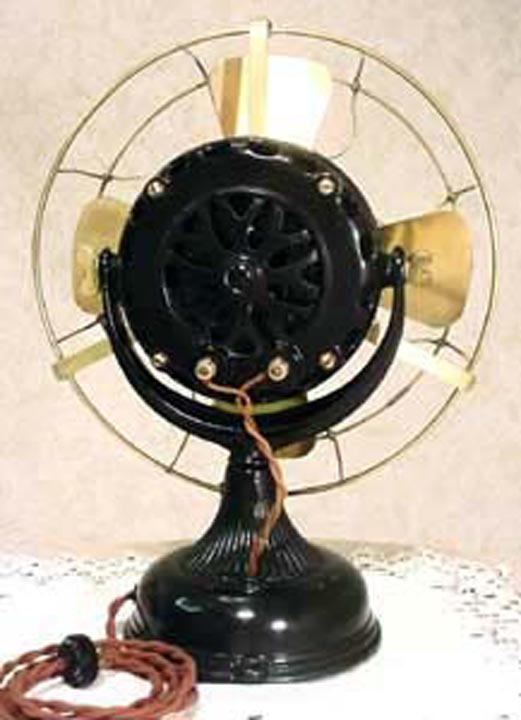
The Dangerous Fan
The workroom fan has prosaic black steel blades
Note "hot wiring to terminals on the rear
Click Here to see a video of this fan in action
Click to Enlarge
You can go to the website of the American Fan Collectors Association to learn a whole lot more about fans.
Click here to look at another type of collectible, or keep on scrolling for more Fans.
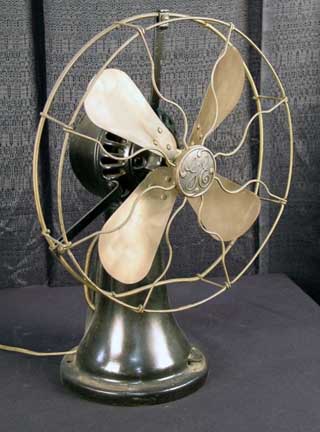
The GE Prepayment Fan
Posted October 24, 2005
This is a General Electric Prepayment Fan. It is just like a juke box -- you had to put a nickel in it to get 5 minutes of cool air!! This fan was made in 1905 -- back when electricity was QUITE expensive -- a nickel then is equivalent to something like $1.50 today. These were available in luxury hotels and are quite akin to those "mini-bars" that have outrageously sexpensive snacks in them. This would have set you back about $30 (of today's dollars) per hour
You can go to the website of the American Fan Collectors Association to learn a whole lot more about fans.
Click here to look at another type of collectible, or keep on scrolling for more Fans.
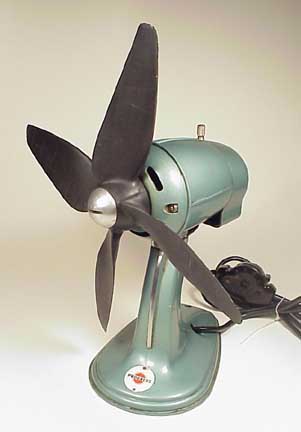
The Progress Fan
Posted October 22, 2005
This photo was sent to us by our friend "Acme Ron" from Arizona. He writes:
Here is a fan I've had a long time. It is marked "Progress WO3", no patent numbers. The rubber blades are still flexible. Wraps up like an airplane, very high speed. I stuck my finger in the blades to see what happens and my finger just bounced off from the front because of the speed. On the end is another matter, feels like a meat slicer.
You can go to the website of the American Fan Collectors Association to learn a whole lot more about fans.
Click here to look at another type of collectible, or keep on scrolling for more Fans.
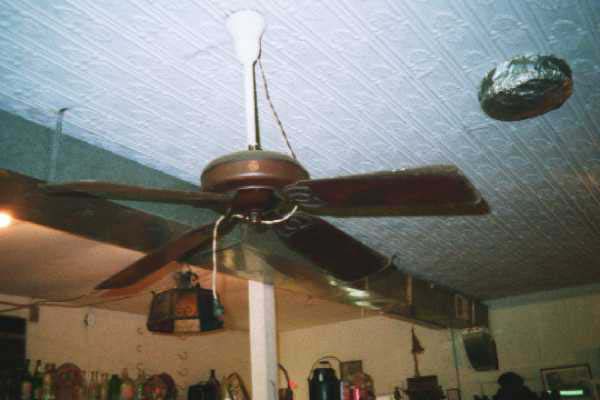
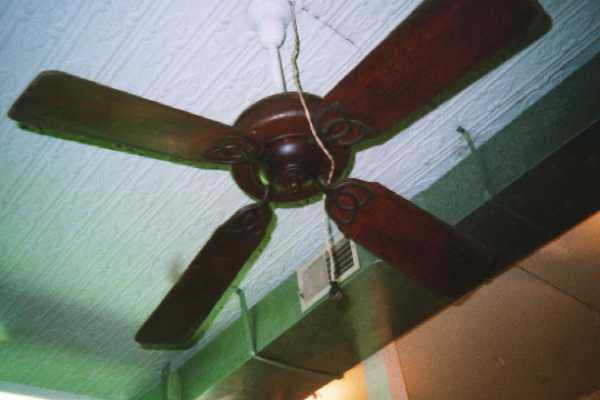
The GE Fan in Moorefield, West Virginia
Click to Enlarge
Posted April 5, 2002
I do not own this fan, although I wish that I did. I spotted it in a roadside store in Moorefield, West Virginia, which is WAY off the beaten path. The store has the original wiring and pressed tin ceiling. I looked at the circuit and it looked like there was a rectifier serving the fan. From all appearnces, this is a very early DC ceiling fan. This is way beyond me and I would welcome any input from those with more knowledge.
You can go to the website of the American Fan Collectors Association to learn a whole lot more about fans, but even they have nothing like this in their gallery.
Click here to look at another type of collectible, or keep on scrolling for more Fans.
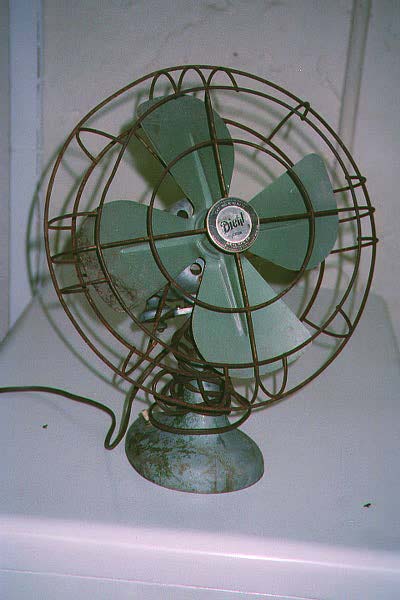
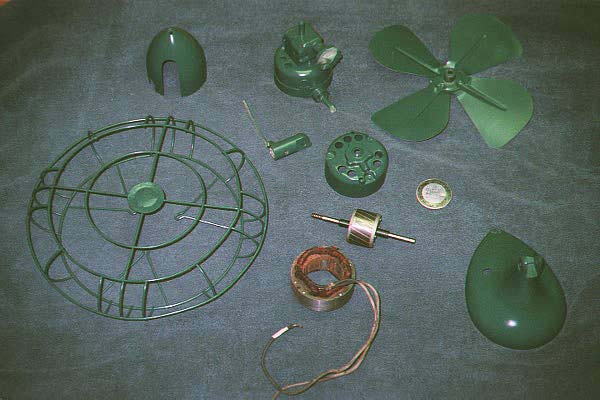
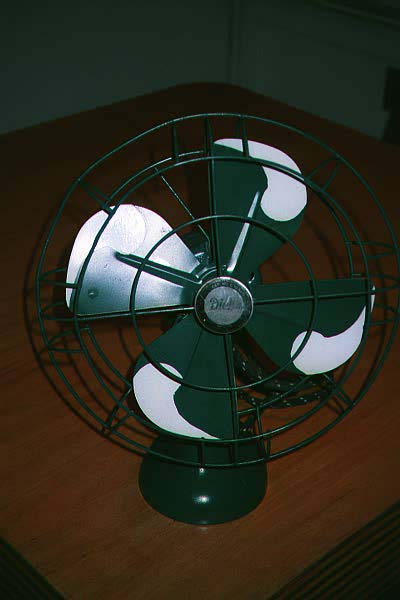
The Diehl Fan
(left) as found (middle) dis-assembled fan (right) After restoration
Click to Enlarge
Posted June 15, 2001, Augmented March 23, 2010
I was very lucky to find this little fan in a thrift store in Front Royal. The lady charged me $5 for it as shown in the first photo. The fan sort of worked, but it was "lazy" on startup. This generally means that the bearings need attention or that there is a wiring problem. Also, it appeared that someone had applied a coat of paint to the fan at some time to cover up some rust damage. Thus, the fan became a prime candidate for restoration.
This gives me a chance to show you what is inside a fan. The second photo illustrates the basic elements of most desk fans. There isn't much, so you should not have a whole lot of fear about fixing fans. The items are organized into two roughly concentric circles:
The Outer Circle, labeled clockwise, starting at about 1:00
- (a)The Fan Blade
- (b)The Base (shaped like a tear drop)
- (c)The Stator showing Armature and Head Wires
- (d)The Blade Guard
- (e)The Motor Housing (decorative)
- (f)The Oscillator Gearbox
The Inner Circle, labeled clockwise, starting at about 1:00
- (g)The Front Motor Case and Bearing
- (h)The Badge (goes in the center of the Blade Guard)
- (i)The Rotor
- (j)The Oscillator shaft
The Oscillator is the mechanism to make the fan "nod" from side to side.
The Rotor (part "i" ) fits inside the Stator (c). Electrical current comes through the headwires and flows into the Armature, which is a series of electromagnets. The rotor makes and breaks contacts turning on (and off) each of the electromagnets --- which in turn "pull" the rotor around. One end of the rotor is attached to the blade (a) and the other is attached to the Oscillator Gearbox (f). The Front Motor Case (g) attaches to the gearbox to contain the Rotor and Stator. The Oscillator Shaft (j) attaches to the heavily weighted base (b) and the Gearbox (f). A "nose cone" Motor Housing (e) covers the oscillator mechanism. The Blade Guard (d) attaches to the motor case for safety. The Badge (h) is the manufacturer's nameplate.
Isn't that simple!
Actually, you can go to the website of the American Fan Collectors Association to learn a whole lot more about all of these concepts. LATELY, we have had some trouble connecting to this site and have a suspicion that it may have gone out of business.
The finished fan re-creates some decorative touches that were found when I removed the dull green paint. My thanks to the guys at the Monarch Paint store on Connecticut Avenue who helped me match the exact colors. When the fan is in operation, the blades appear to have several concentric rings of green and white.
For those with more technical interests, here are the details from the manufacturer's nameplate:
Cat No C10AJ17
Diehl "Junior"
Diehl Mfg Co
Finderne NJ USA
Electrical Division of the Singer Mfg Co
To see more Diehl Fans from other collectors, Click Here. One of our readers sent us a photo of a curious "Diehl Fan Table", which we discuss below with "Hassock Fans".
Scrolling forward to March, 2010, we heard from reader Merril:
"... My friend gave me this a few days ago ...I put a new power cord on it and it runs real quiet. There is a wiring problem with it as someone has switched the field windings around and messed up the speed via the 4 position chain pull switch. It now has a High,Low,Medium, and another Low speed but no turn off. It will only start on the High and Medium ranges as these two have enough magnetic force to get it turning. I tried ... moving the blade when the switch is in the low speed position... but could not turn it fast enough because of the fan cover slots being too small. After starting it in the High and Medium positions, I pull the switch to Low and it runs just fine so it's not the Low speed windings...
"...I suspect that the start capacitor is not wired properly into the circuit. I have a lot of old induction motors that I use for powering things like fans, wire brush grinders, home made wood lathe and a few other items that I have to reverse the start capacitor on in order to get the right rotation. It's no problem with a one speed motor but when it's a three speed motor, there are a lot more field windings leads and sometimes they use two separate windings to create the different speeds. Choosing the different leads it hard without a wiring diagram.
Here is the data on the motor plate:
Electrical Division of The Singer Mfg. Co.
The next line is the Catalog # which is not readable
HP 1/6 Duty Fan
Amps 2.2 RPM 1100
Amps 1.1 RPM 800
Serial #26E-143-2223-1 Serial number on last line of the plate is #36
The fan blades measured 23" in Diameter
"...I had to use a boom on the back of my tractor to move it...
"... It's in beautiful shape and if for no other reason. I will use it for a shop cooling fan. I have been collecting the history of Mr. Diehl and his association with Singer and Edison ..."
We agree with Merrill that this is a real beauty! See for yourself:
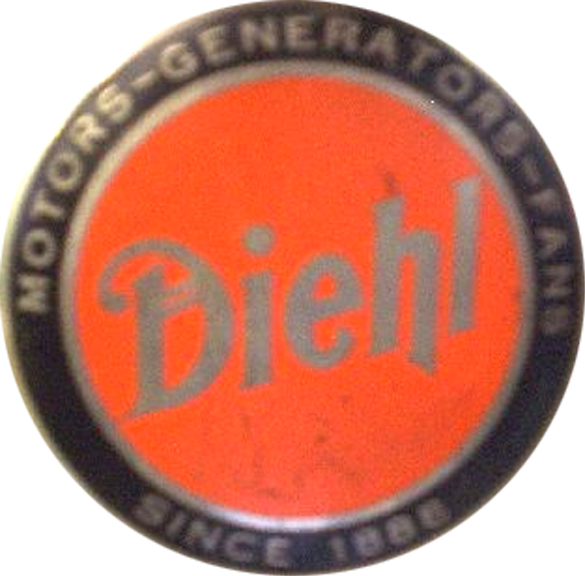
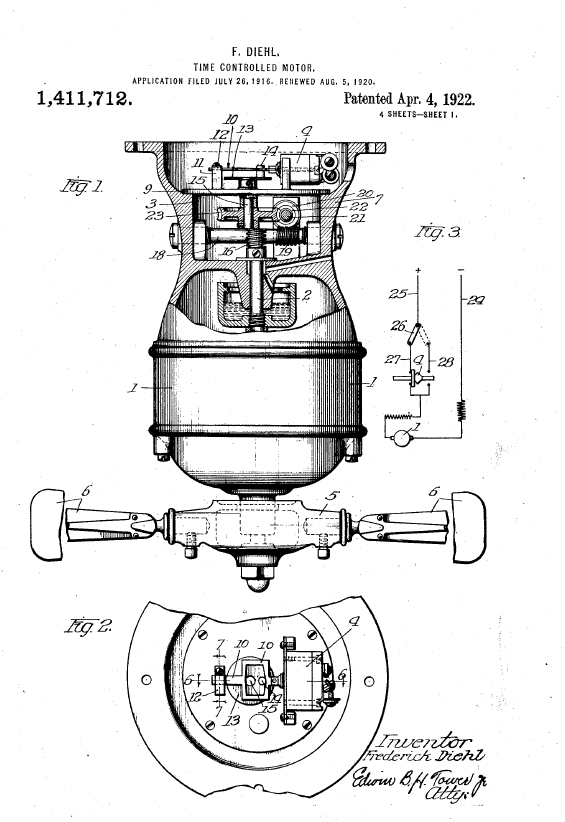
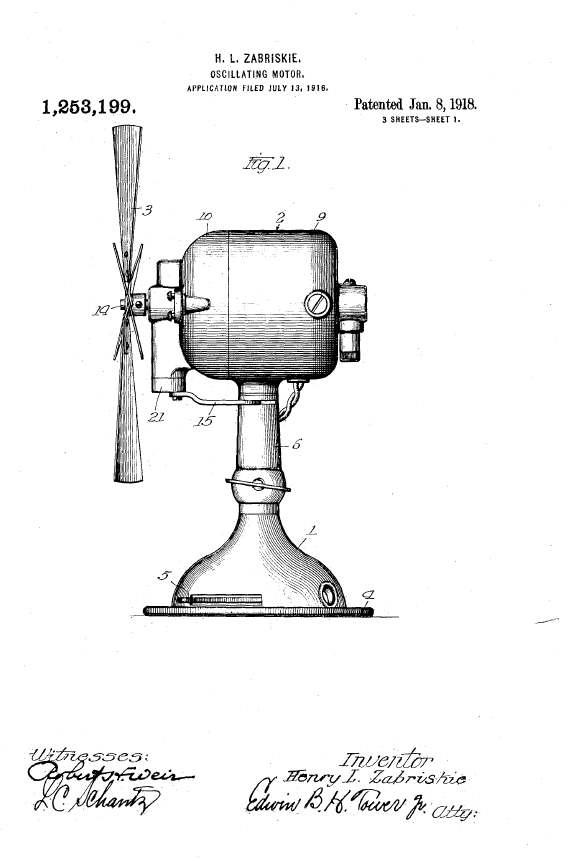
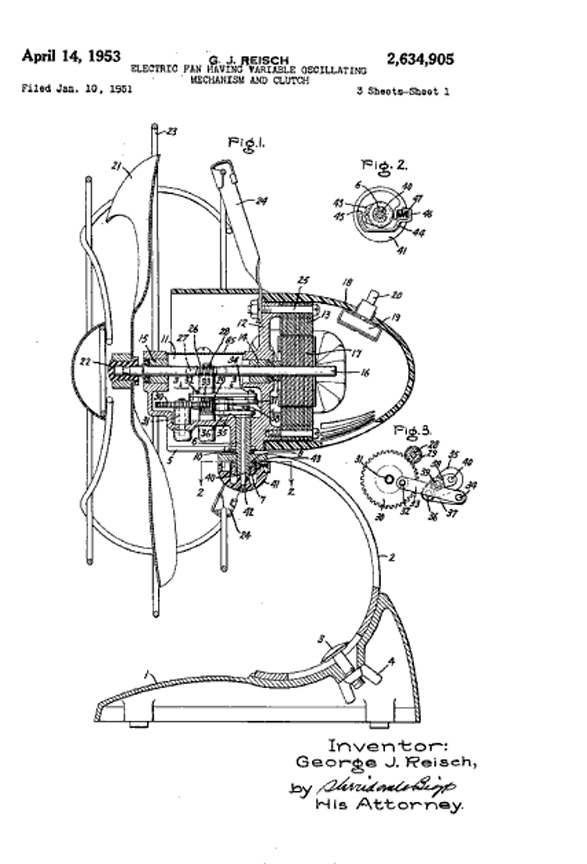 The Famous Diehl Fan Badge
Critical Diehl Patents, Nos. 1,411,712; 1,253,199; and 2,634,905
Click to Enlarge
Click Here to learn how to get free Patent Drawings

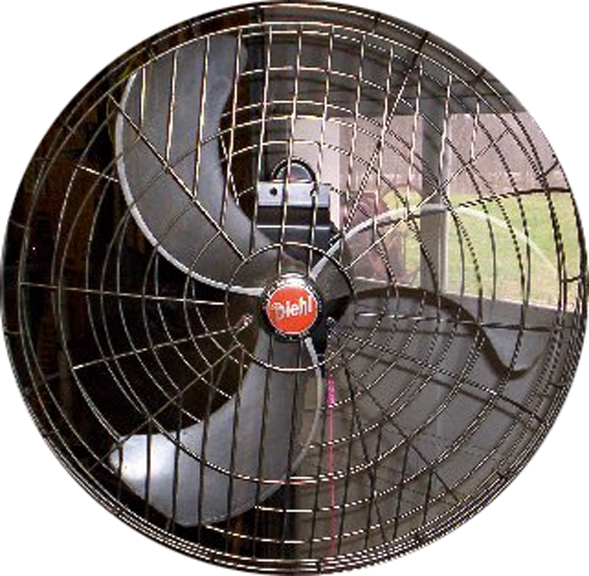
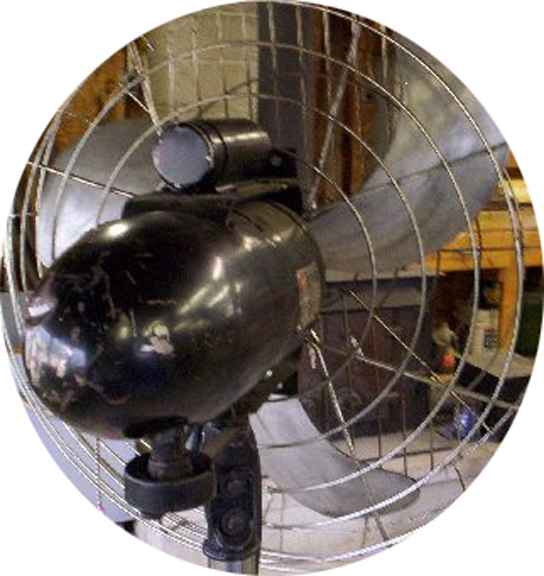
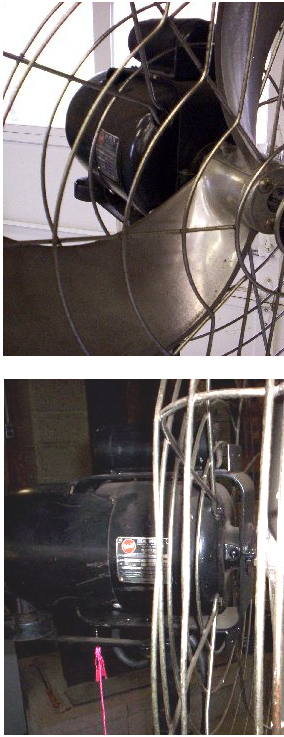 The Diehl Floor Fan
(Click to Enlarge
Click here to look at another type of collectible, or keep on scrolling for more Fans.

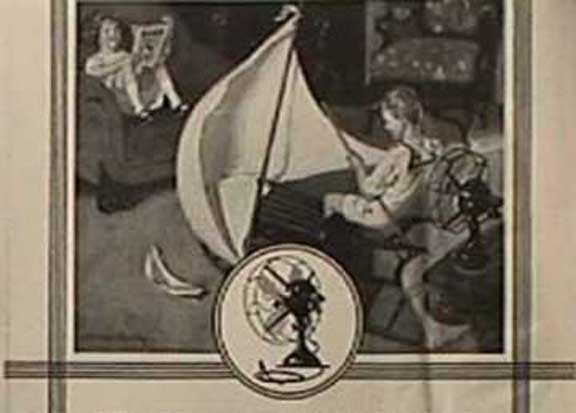
Robbins & Myers Desk Fan
(plus a charming Ad for this fan)
Click to Enlarge
Robbins & Myers four blade motor driven oscillating table/desk fan. The 14" guard is composed of rings held together by "S" shaped wires at the center of the guard is the "R-M" initials (in Art Nouveau script) emblazoned on a pennant.
Robbins & Myers fans were known for durability and high quality. We have determined from the serial number, and the handy reference guide at the website of the American Fan Collectors Association that this fan was made in 1927 and is one of a group of 130,000. The best thing is that it works PERFECTLY. All we did was clean it.
For those of you with interest in details, here is the information from the manufacturer's nameplate:
Alternating Current Fan
Made and Patented in the U.S.A.
No. 1420486, 1567401, 1576684
110 Volts 60 Cycles List No 5204
The Robbins & Myers Co, Springfield Ohio
Click here to look at another type of collectible, or keep on scrolling for more Fans.
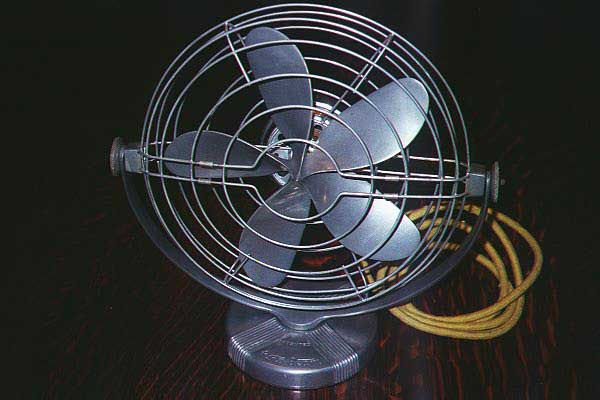
Roto-Beam Electric Air Circulator
A fan from the Air Age
Click to Enlarge
This is our gorgeous Roto-Beam fan. This is one of my most favored objects from the 1930s, because it really embodies the spirit of the Air Age. At the time, sophisticated young people were fascinated with the flowing streamlined shapes that were evolving out of aircraft design.
The fan rotates 360 degrees around the vertical axis and is suspended in a "harp" that permits it to rotate 90 degrees around its horizontal axis. It makes a great floor fan or desk fan --or-- using a clever mount on the back, it may be hung on a wall. It is very utilitarian. It is also well built. The blade, base, and harp are all heavy cast aluminum. The motor case is chrome-plated steel, the cage is chrome plated copper wire. The motor has extra-heavy duty winding on the armature which is, in turn, sealed with phenolic resin.
This fan is really a sculptural object --- the proportions are very elegant. The fan blade is exceptionally well-designed and machined to very fine tolerances; in addition to the Air Age, the blade also suggests some kind of exotic marine creature. The base has classic "Style Moderne" decoration, including the famous " four paralell lines" made famous by Raymond Loewy. The words "Roto Beam" are presented in typography that makes the letters look like they are composed of lighning bolts. The yellow cloth cord is a really zany touch
With the sole exception of cleaning approximately 60 years of dirt, the fan is in perfect condition. We found it for about $5 at a junk store near Haussner's Restaurant on Eastern Avenue in Baltimore.
Our Fan Guru, who is also a "Fan" of Rob Bamberger's show, has this to say:
From Dave: "I saw your Roto Beam. Looks great. It is an earlier one. The Roto Beam salesman's book I have emphasizes, in typical marketing of the period, that Roto-Beams are not fans... they are Air Circulators! (well excuse me!) A little over blown (excuse the pun), but they were definitely unique."
For pictures of more great Roto-Beam fans, check out the website of the American Fan Collectors Association.
Click here to look at another type of collectible, or keep on scrolling for more Fans.

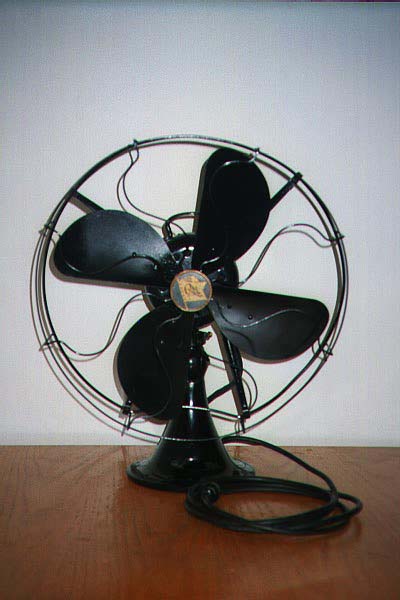

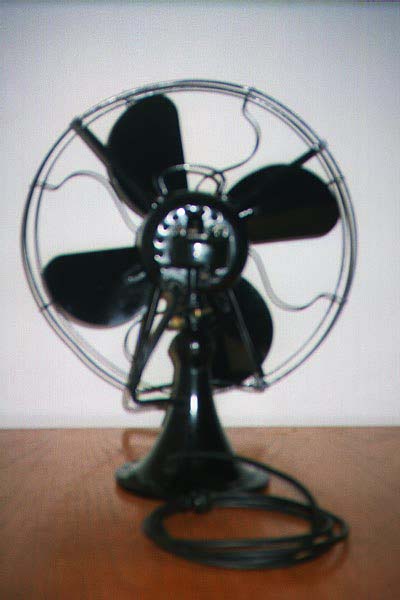
The Emerson Fan Type 73648AK
..it has a Robbins & Myers Blade Guard
(left) Before (right) After - front, side, back
Click to Enlarge
This is a very inusual item: It has a Robbins & Myers guard, but is really an Emerson fan. The guard is 16 inches in diameter. Given its age and condition, it looks like something happened to the Emerson blade guard and the Robbins & Myers guard was substituted. (It seems to fit perfectly and it does not appear that someone drilled new holes to fit it on.)
We have determined from the serial number, and the handy reference guide at the website of the American Fan Collectors Association that the fan was made in about 1934 and is one of a group of 164,000. In the Emerson serial number (73648) The first two digits tell the model number ("73"), the next digit tells the alternating current required ("6" = 60 cycles), the next digit tells the number of blades ("4" = 4 blades) and the rightmost digit tells the radius of the fan ("8" = 8 inches). Of course, this was obvious when we looked at the fan...
The fan needed to be restored from the ground up. The old fabric-covered cord had to be replaced and there was considerable rust. So, we disassembled everything and wound up with six coffee cans filled with parts. This is the most complex fan that we have ever restored. If you are interested, the shaft of the motor is cast directly into the rear motor casing, providing incredible stability. The speed is controlled directly within the motor by using various portions of the field coils; accordingly, there are three "head wire" connections to be made to the very delicate leads emerging from the coils. We are indebted to Dave Friedlund of the Fan Collectors Website for help and assistance on the restoration of the wiring
After a brand new paint job, the fan looks like we took it off the showroom floor. At high speed, it could double as a wind machine and it is perfectly quiet. They don't make fans like this anymore!
Our Fan Guru, who is also a "Fan" of Rob Bamberger's show, has this to say:
From Dave: "Emersons are extremely well built and usually will last forever if taken care of." We throughly agree with him!
For those of you with further interest in the technical details, here is the information from the manufacturer's nameplate
The Emerson Electric Fan Mfg Co.
St. Louis, Mo
Type 73648AK
Volts 110 Cycles 60 Amps 0.83
Made in the United States of America
For Alternating Current
Patented
NP 864
Speaking of Emerson Fans, here is a photo from a World War II era training pamphlet. The subject was "How to use electrical appliances." Many rural households were just getting electricity due to the Rural Electrification Administration (REA) and the pamphlet was intended to get folks up to speed with the rest of the country. This photo shows the Government-approved method of storing a fan (i.e. put a paper bag over it). The fan being stored is an Emerson Model 73648AK (just like ours...)from about 1936
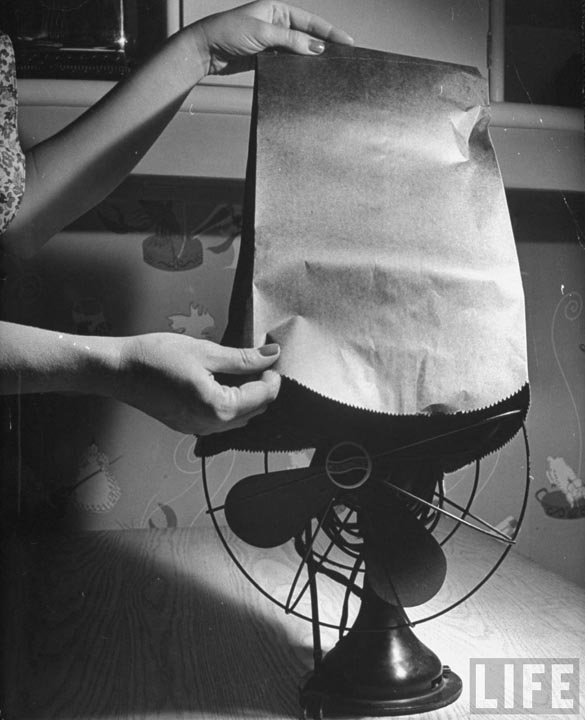
Storing the Emerson 73648AK
Click to Enlarge
Click here to look at another type of collectible, or keep on scrolling for more Fans.
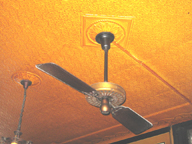
Ceiling Fan at Fanelli's Cafe (SoHo, NYC)
Click to Enlarge
Posted September 15, 2009
This two-bladed ceiling fan may be found attached to the original tin ceiling at Fanelli's Cafe at the corner of Prince and Mercer Streets in the SoHo neighborhood of New York City. Fanelli's is the second oldest tavern in New York, dating back to 1847. Our best guess (based on the blades and tulip-shaped switch) is that this is an Emerson Fan, from the 1900-1905 period.
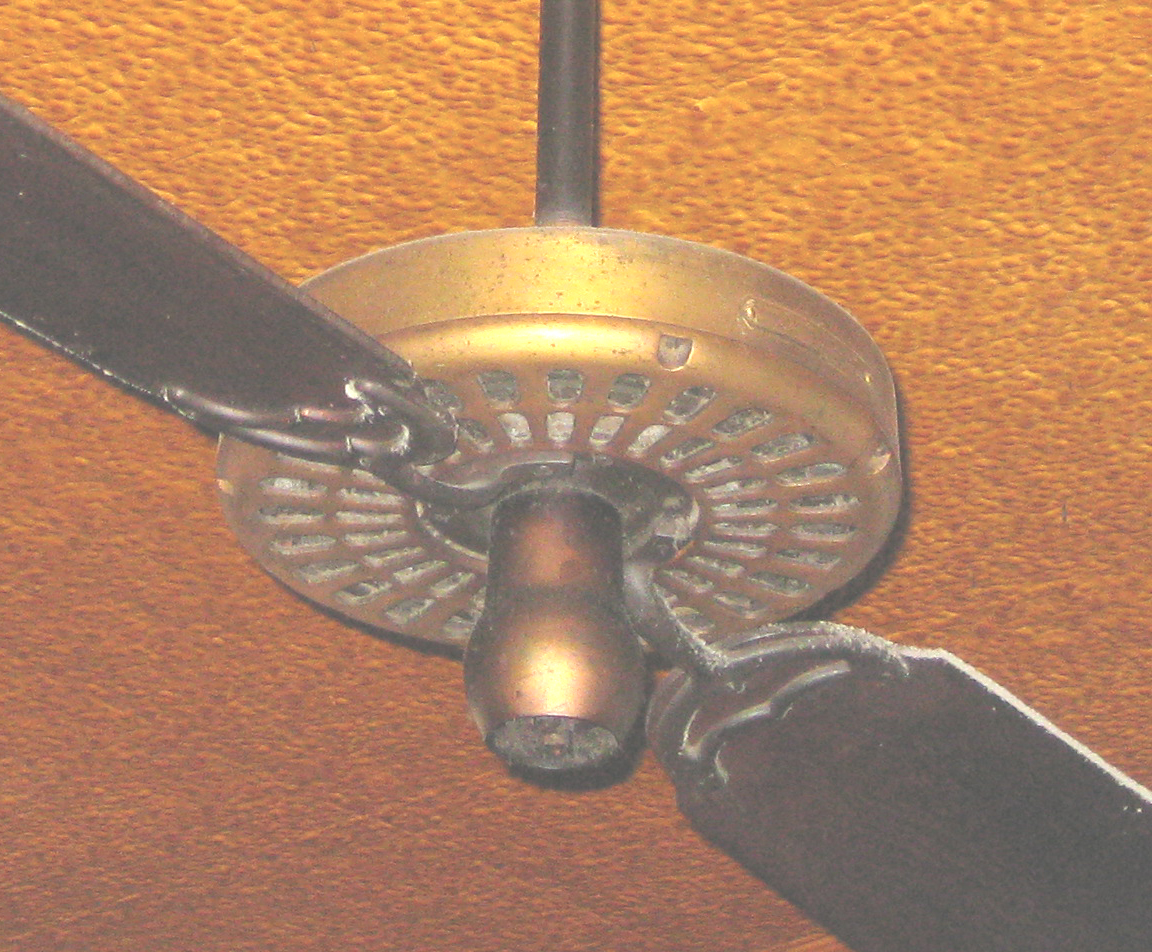
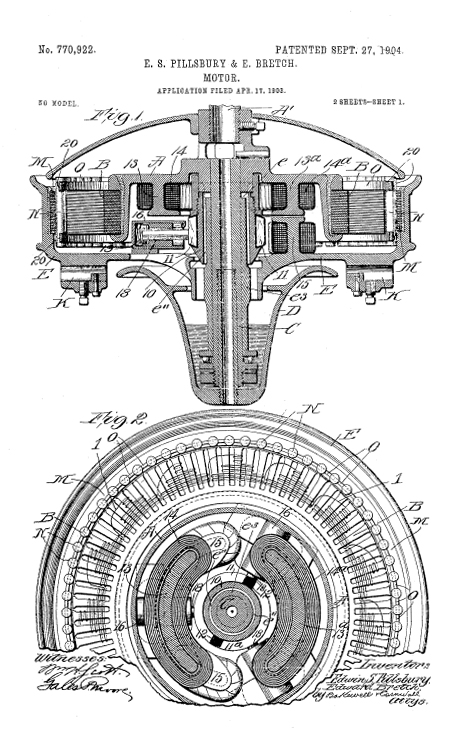
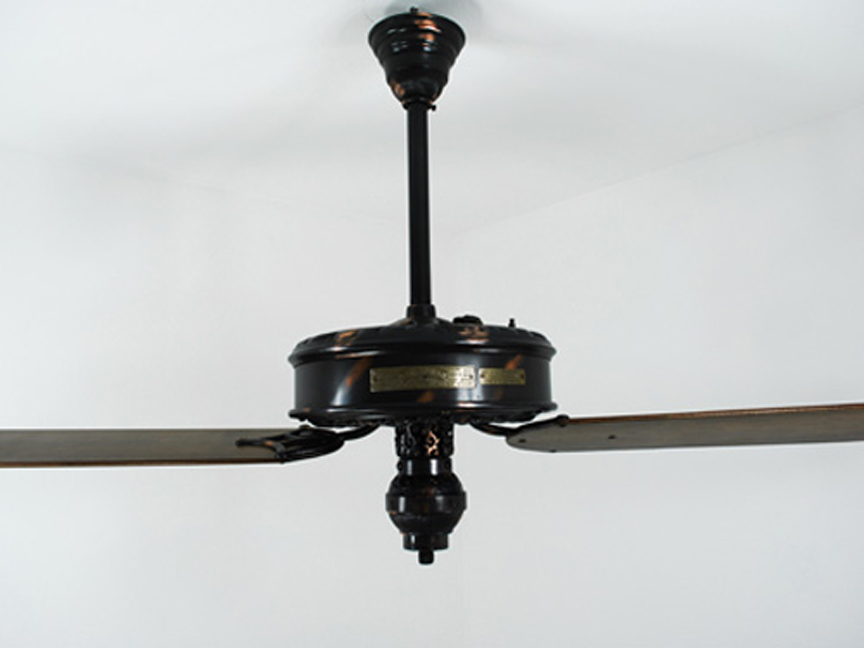
Identification of the Ceiling Fan at Fanelli's Cafe (SoHo, NYC)
(left) Closeup of motor and switch of the Fanelli Fan
(middle) Pillsbury and Bretch Ceiling Fan Patent No. 770,922
(right) Emerson Model CF-22 Ceiling Fan (for comparison)
Click to Enlarge
Click Here to learn how to get free Patent Drawings
The Emerson Electric Company (of St. Louis) was a leader among the early alternating current ceiling fan manufacturers. The first practical brushless alternating current ceiling fan Emerson produced was introduced in 1897 as the type CF 28 model. The two bladed CF-28 was extremely ornamental, and helped the company gain market share in the growing AC ceiling fan market. Emerson manufactured the CF-28 through 1901 or so. Other models followed including a one to two year only model, the two bladed CF-14. Around 1903, a new larger sized motor was introduced the two blade CF-20.
The basic design of CF-20 would essentially be basis for the ornamental ceiling fan that Emerson would build upon through the teens, making improvements and eventually eliminating the two blade design for a four blade version only
You can go to the website of the American Fan Collectors Association to learn a whole lot more about fans.
Click here to look at another type of collectible, or keep on scrolling for more Fans.
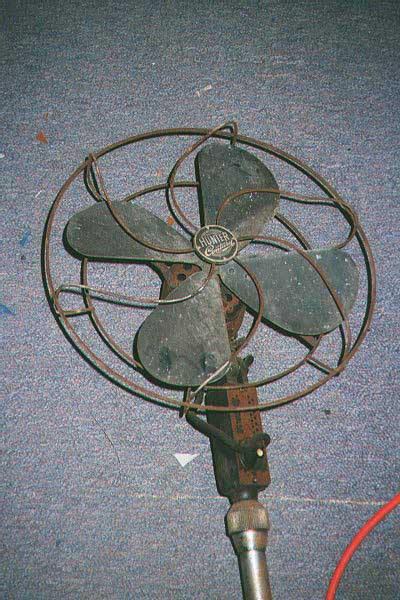
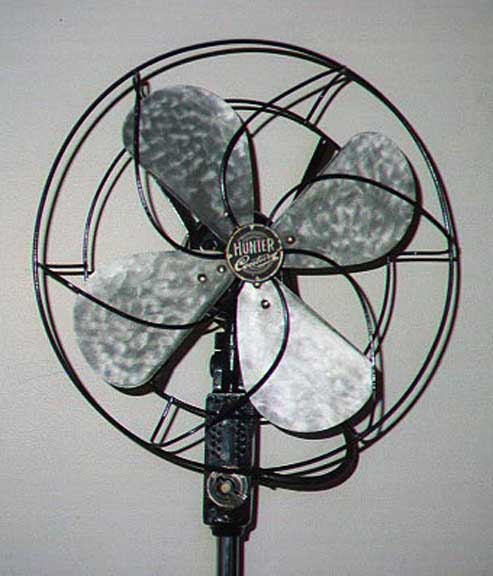
Hunter Century Fan Before and After
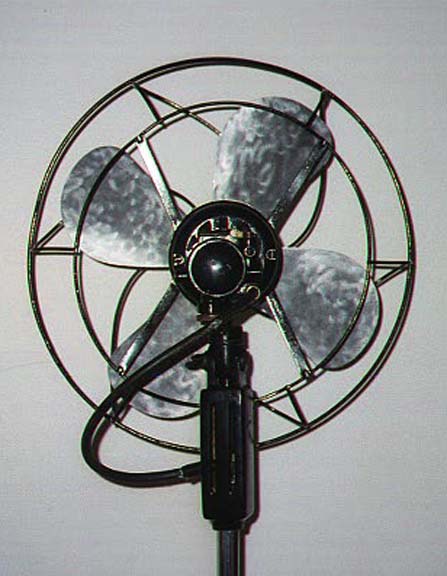
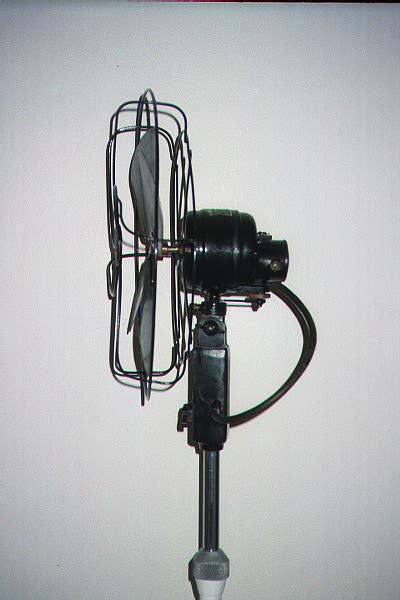
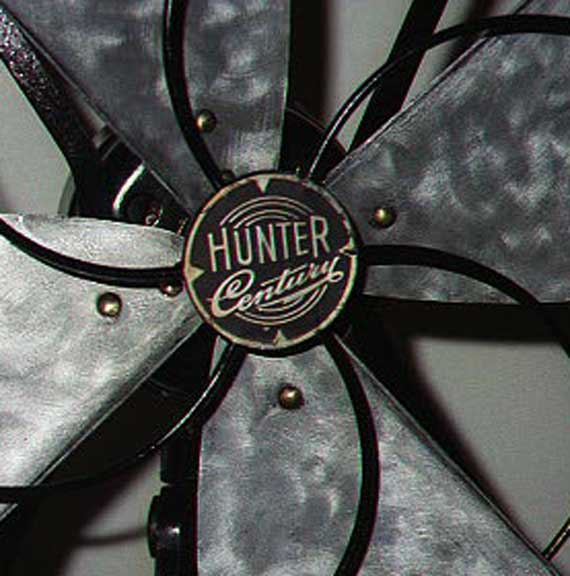
Hunter Century Fan (Back, Side, Badge)
Another Monumental Effort...
Click to Enlarge
This fan was very far gone and required a complete bottom-to- top restoration. Both parts of the stand were intitially chromed, but there was too much deterioration on the bottom part to save it, so we painted it white so that it would fit in with the kitchen, where it proudly stands.
The interesting thing is the speed control which is a rheostat (a device which lowers voltage by resistance, converting electrical energy to heat). The thing that looks like a microphone is a perforated housing that vents this heat. Here's a design patent for this type of fan:
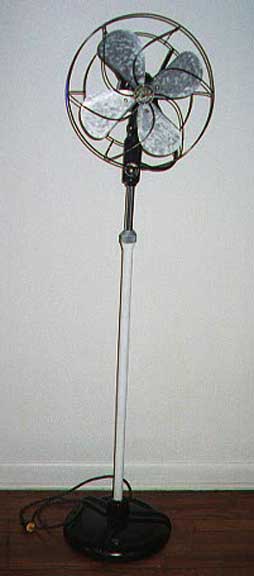
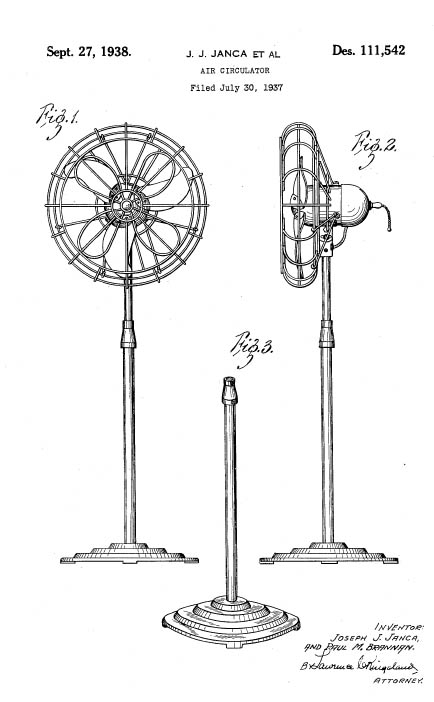
The Floor Fan
Design Patent D-111,542
Click to Enlarge
Click Here to learn how to get free Patent Drawings
In its gleaming new configuration, it provides a refresing breeze in the kitchen. For those with more detailed technical interest, the information on the manufacturer's name plate is:
Alternating Current Fan
Hunter Fan & Ventilating Company
Fulton, NY
TYPE F-12 CAT 1270
Volts 110 Cycles 60 Amps 0.75
Serial No A04314
Click here to look at another type of collectible, or keep on scrolling for more Fans.
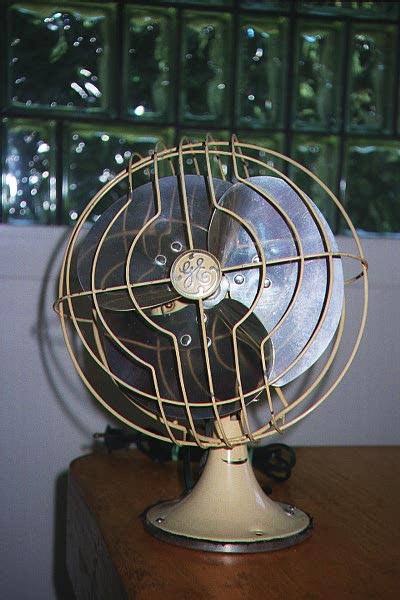
General Electric Fan
A Great Performer
Click to Enlarge
This is a great little General Electric fan from the 1930s. It is an unusual white color and an inspection of the base hints that it was wall-mounted. These two taken together lead us to believe that it may have been used in a hospital. Whatever its prior use, it is in great shape now and needed no restoration other than a cleaning.
For those with interest in technical detail, here is the information from the manufacturer's name plate:
CAT 55X165 NO U74497 Amps 0.5
SPEC 272612-1 Volts 110/120 Cycles 60
USA
Click here to look at another type of collectible, or keep on scrolling for more Fans.

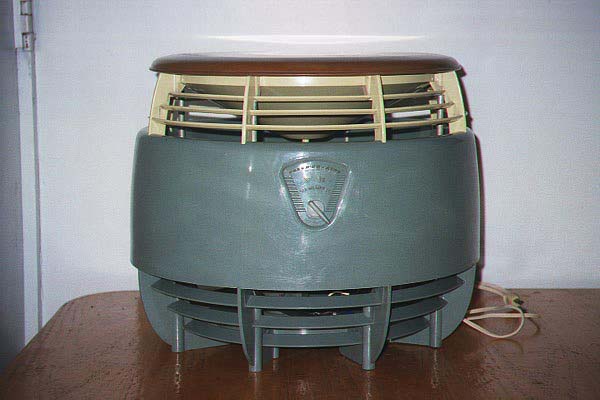
The Freshn'd Aire Fan
A Hassock (Ottoman) Fan
Click to Enlarge
This is a A Freshn'd Aire Model F-12 "Hassock Fan" tan on top, battleship gray on the bottom. The mechanical parts were in excellent condition; all we had to do was replace the cord. The body of the fan is made of molded fiberglass and cleaned up with a little Bon Ami cleanser and water.
Here is the Patent Diagram for the Hassock Fan:
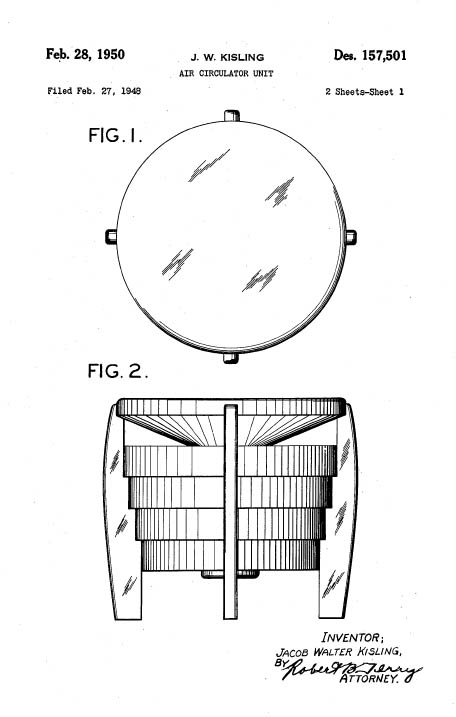
Mr. Kislock's Design Patent D157701 for the Hassock Fan
Click to Enlarge
Click here if you want to learn how to get Free Patent Drawings
This is a great fan that gently circlates air, picking cool air up at the bottom and passing it out through the vents at the top. The concept is to circulate air in a room while providing additional use for the space taken up by the fan -- especially when it wasn't being used. These fans often can be run in reverse as well, moving air from about chair height and dispersing it along the floor. This could be quite effective in dealing with tobacco smoke -- to the extent that they (at least) kept it out of people's eyes while diluting it.
Our Fan Guru has this to say:
From Dave: "Hassock fans were introduced (I think) in the mid 40's. Keep an eye out for a 'Welch Air-Flight' in clear Lucite. Real neat looking."
For those with interest in technical detail, here is the information from the manufacturer's name plate:
Patents Pending
Model F-12 No. A-2023
Cycles 60 Volts 115AC
Watts 120 RPM 600-1550
Freshn'd Aire Company
Chicago 29, Ill
Made in USA
Here is a photo of a "Fan Table" made by the Diehl Corporation of Finderne, New Jersey. (It is Model 1672-2, catalog number 1a2f16).
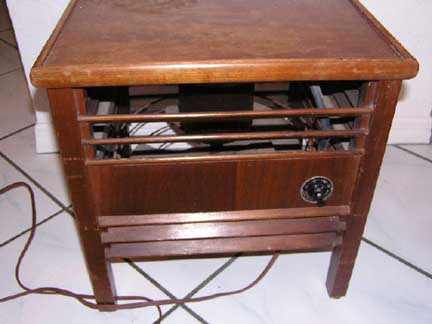
Diehl Fan table
I have some serious doubts about the aerodynamic performance of this item.
Click here to look at another type of collectible, or keep on scrolling for more Fans.
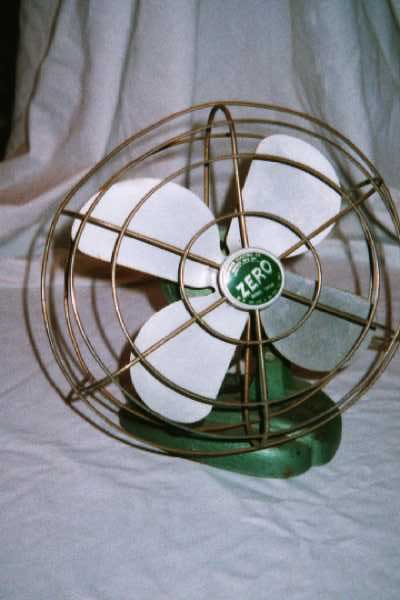
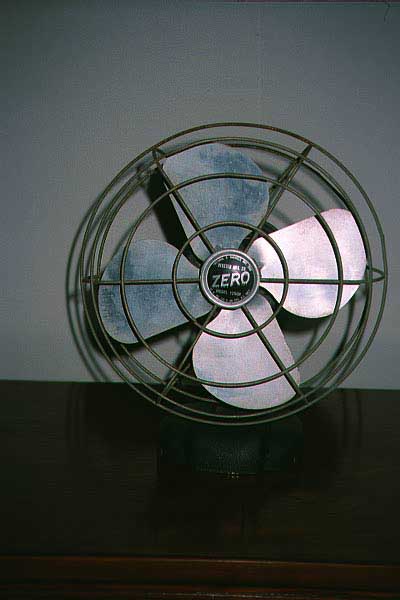
"ZERO" Drug Store Fan
Cheap but Clever
Click to Enlarge
This is a great example of what collectors call a "Drug Store Fan" --- Generally, these were cheaply made, but had an enchanting design. They were sold at Drug Stores for half to a third of the price of quality fans. In order to conceal the fact that they were not as substantial as the fans sold in appliance stores, they most often used dramatic colors and lettering to attract the customer. Because they were not very well made, many were discarded. This leads to the contadiction - -- these are mechanically junk, but they are also quite rare. Thus, a mediocre "Drug Store Fan" can often fetch much higher prices than quality fans. I particularly like this one because the letters in the word "ZERO" appears to be made of melting ice.
There is actually a little bit of technical detail on this fan. From the manufacturer's nameplate, we have:
Bersted Manufacturing Company
Fostoria, Ohio
Model 1250Rt
40 Watts Volts 105-120
Check the website of the American Fan Collectors Association for more cleverly designed Drug Store fans. Also, check out our special page on all kinds of Drug Store Appliances including toasters, fans, mixers and others.
Click here to look at another type of collectible, or keep on scrolling for more Fans.
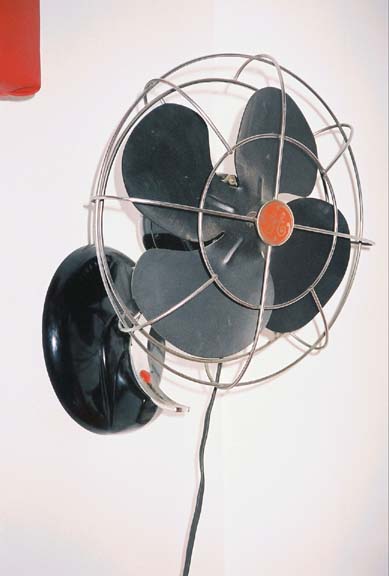
General Electric Fan
The Bracket is fantastic
Click to Enlarge
This is a very nice General Electric oscillating fan with a wonderful art-deco inspired bracket. The red, black and chrome color scheme is just marvelous. The only problem seems to be that there is no manufacturer's plate, so I can't give you any technical detail!
Click here to look at another type of collectible, or keep on scrolling for more Fans.
For the Florida Room
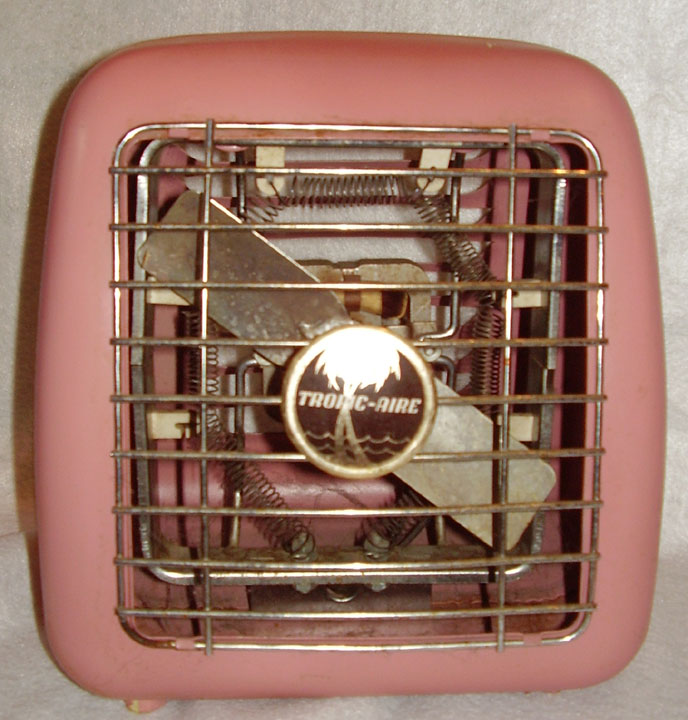
This is a great little room heater from the 1950s. It has a ceramic frame inside and nichrome wire is strung around it. A small pressed-metal blade, driven by a cheesy little moto blows the air out the grille. This is most assuredly a "Drug Store Heater" --- cheaply made, but with an enchanting design, particularly the palm tree on the badge.
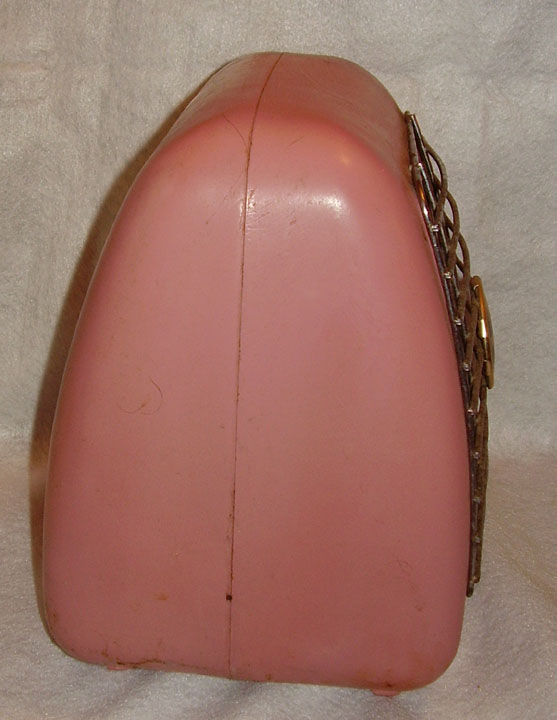
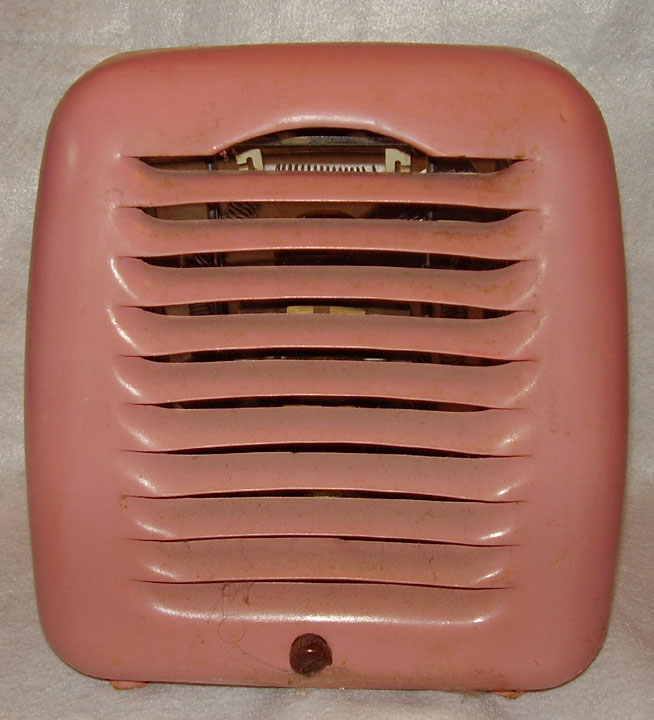

Tropic Aire Heater, Side and Back View
Tropic Aire Heater Design Patent D-148,594
The piece, obtained at a flea market in Westminster, has a position of honor in the Florida powder room.
Click here to look at another type of collectible, or keep on scrolling for more Fans.
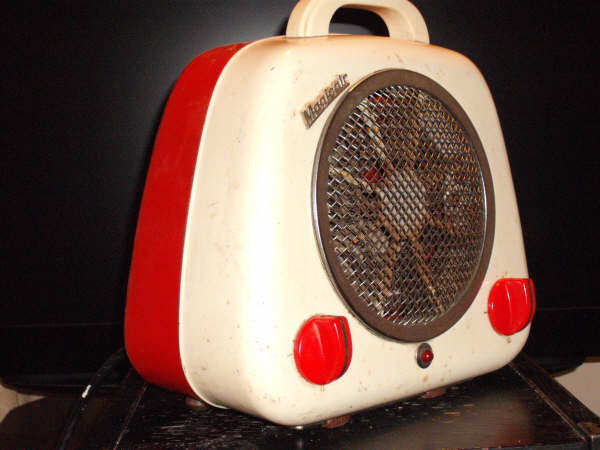
The "Magicair Heater
We got this photo from Graham, one of our readers. He says:
"... I have a retro fan heater that looks like a radio. It has a red front, white back and is made of metal. there are two dials on the font that control the temperature and fan speed. The model is 'magicair' however the manufacturers badge at the back has fallen off. Weeks of trawling the internet has come up with nothing so far. ..."
If anyone can help out with this mystery, please Contact Me.
Click here to look at another type of collectible, or keep on scrolling for more Fans.
The Universal Heater
Click to Enlarge
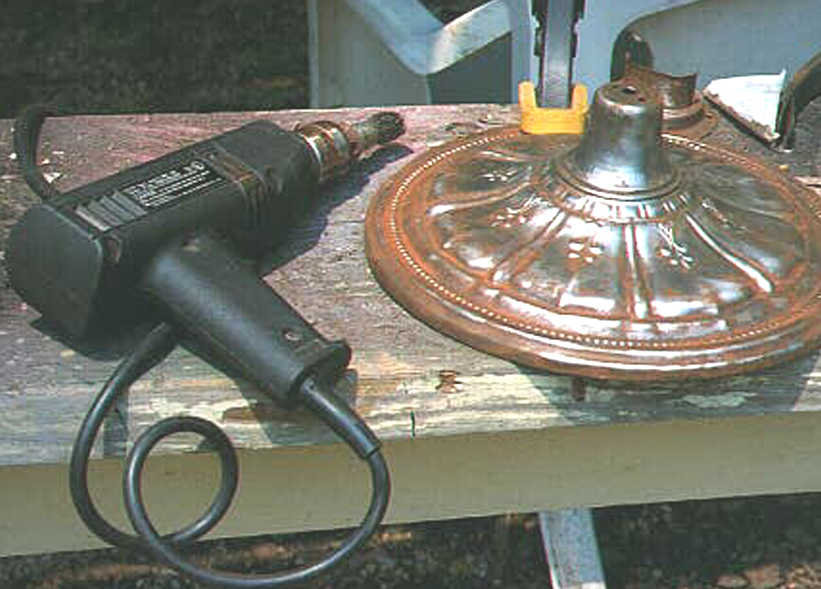
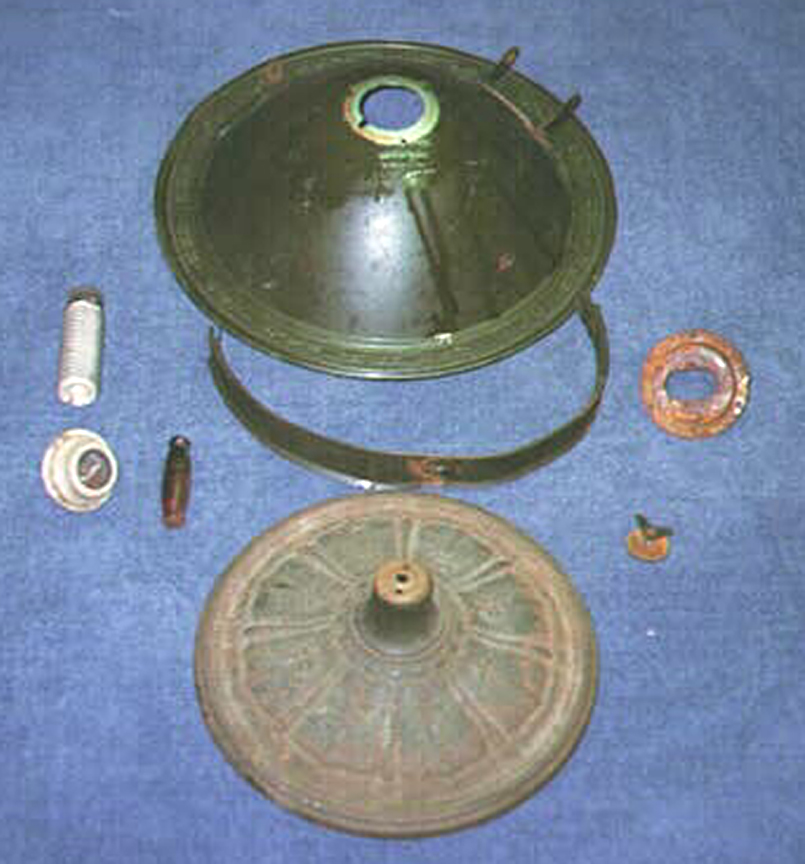
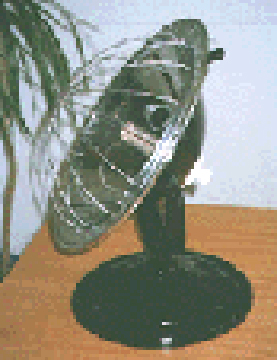
This is a room heater, pretty much the opposite of a fan. What's it doing here? The answer is that a whole lot of fan companies also made heaters, spreading their business over the whole year. This device has a whole lot in common with the fan - -- a base, housing and protective grille. There is, however, no motor. There is a heat element which is composed of nichrome wire wound around a ceramic core. Electricity is delivered to the element and the core heats up. The highly polished parabolic relector focuse the heat outward. This heater has the additional wrinkle of modularizing the heating element --- the ceramic core has a thread on the end just like a light bulb. The core could be replaced easily if the wire burned out. For my money, this is about the prettiest of these heaters that I have ever seen. I found it in a junk pile in Culpeper and took it away for $5, mainly because it was getting late and I didn't have time to haggle...
For those of you with interest in Technical detail, here is the information from the manufacturer's nameplate
Made in USA
Landers, Ferry & Clark
New Britain, Connecticut
No. E7937 Volts 108-116 Watts 625
Here is the patent diagram for the Universal Heater:

Technical Details of the Universal Heater
Patent No. 1,423,039
Click to Enlarge
Click here to look at another type of collectible.
Counter for the ENTIRE WEBSITE

Home | About Lindy | 1940s Collectibles | Upcoming Events | Dancers' Forum
The Guide - Establishments - Travel - Accessories
Music | Links | Photo Gallery | Extras | Contact