Benny Goodman's
1938 Carnegie Hall Concert
Dancing in the Aisles!
Why is the 1938 Carnegie Hall Concert so Important?
The 1938 Concert marks the acceptance of jazz as a legitimate art form by the opinion makers for mainstream American society.
Legend holds that the idea to present the Goodman band in concert at Carnegie Hall began as a publicity stunt by Wynn Nathanson, Goodman's
publicist. (The publicity stunt assertion shows up hunderds of times, but "Wynn Nathanson" shows up nowhere else on the internet.) Recently, I got this note from Richard Balin, a close friend of the elusive Mr. Nathanson.
He writes:"Found your page while looking up my late friend Wynn Nathanson and saw your note about Carnegie Hall.
[Nathanson] was a close friend of mine in his later life, and yes he did put Goodman in Carnegie Hall...he began as a publicist and for most of his life was a very close friend and neighbor with Sol Hurok's daughter...possibly how he got Hurok to present Goodman...later Wynn became publicist for countries, representing Colombia among other South American countries...at one meeting there were giftbags of uncut jewels including emeralds and David Webb fashioned them into jewelry for his then wife Siva...after Siva died, he married Mimi Bochco [mother of]Steven Bochco (L.A. Law, Hill Street Blues, etc) [Mimi] was also a friend and neighbor with the Huroks...you are right, there doesn't seem to be much information about [Nathanson] on the internet, but I'm glad I found your post...all the best,
Richard Balin "
Certainly, the idea of playing jazz at Carnegie was revolutionary because at that time, Carnegie Hall was a bastion of musical
propriety, or as Jazz Critic John McDonough put it:
Benny Goodman was initially hesitant about the concert, fearing that Hot Jazz would fall flat before audiences accustomed to classical music.
Original Trailer for Hollywood Hotel
Medley of Songs from Hollywood Hotel
The Structure of the Concert
Benny worked out a comprehensive program for the concert that was very challenging.
- He included several songs that his band had made famous ("Sometimes I'm Happy", "Blue Skies", "Swingtime in the Rockies", and "Sing, Sing, Sing".)
- He added songs that were in production ("Don't Be That way", "One O'Clock Jump", "Life Goes to a Party", "Loch Lomond")
- Benny commissioned Fletecher Henderson to prepare brand new arrangements of "Blue Room" and "Make Believe" (although the latter was not finished in time.)
- He prepared a montage called "Twenty Years of Jazz",that hit the high points in the history of hot music.
- Finally, he tried to introduce the "highbrow" audience to the excitement of an authentic jam session that would feature some of the stars of the Count Basie and Duke Ellington bands along with his own. The jam was based on "Honeysuckle Rose" featuring stars from the Goodman band as well as Buck Clayton, Harry Carney, Freddy Green, Lester Young and Johnny Hodges among others.
The Concert Was a Financial Success
Click Here to view some of the materials used to promote the concert. All 2760 seats sold out weeks in advance. The best seats were priced at $2.75 at a time when most workingmen took home less than 20 cents per hour. For the kids and impoverished artists, there were third level balcony and standing room seats priced at 85 cents. ($2.75 in 1938 is about $90 in 2009 dollars)
An unusual footnote to the event was that it was picketed by pro-Franco (i.e. Fascist) opponents of Goodman's support for the Spanish Republican government.
In the Main, the Concert Was Very Well Received
Briefly, "Twenty Years of Jazz" was good; the jam session laid an egg, but works by the Trio and the Sextet took off. "Swingtime in the Rockies", "Bei Mir Bist du Schoen", "Stompin at the Savoy", "China Boy", and "Dizzy Spells" built the enthusiasm. The finale, "Sing, Sing, Sing" and Gene Krupa's insistent drumming blew the roof off the house, ending with the counterpoint of pianist Jess Stacy's almost pastoral solo. Click Here to view some photographs from the concert.
Here's a selection from "Bei Mir Bist Du Schoen" -- the recording is cut off by the time limit. Martha Tilton returned to the stage and did one more chorus that is not included here.
Recordings of the Concert
There never would have been a recording of the concert if Albert Marx had not taken the initiative. Marx was married to Helen Ward, who was Benny's vocalist from 1934-1937. He decided to record the concert as an anniversary present for Helen. Two copies were ordered, one for Helen and one for Benny.
At the time, recording technology was still in a fairly primitive state. Only three RCA 44BX microphones were used, one above the conductor's podium and two others at ends of the band.
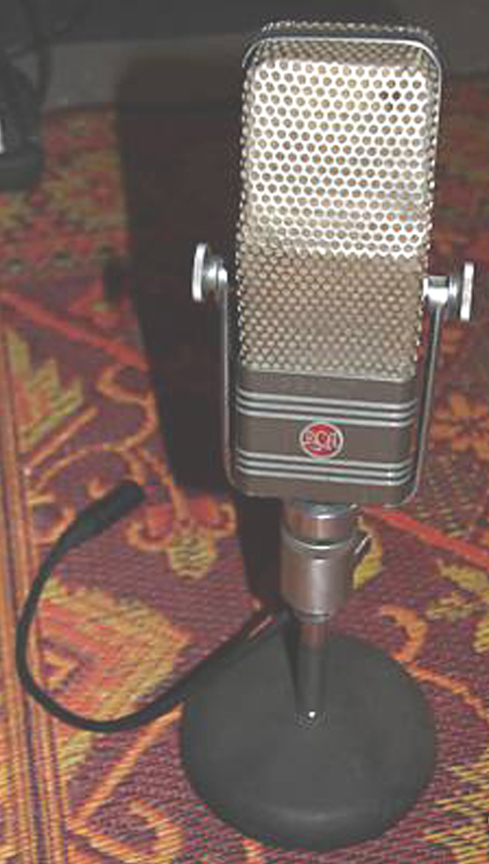
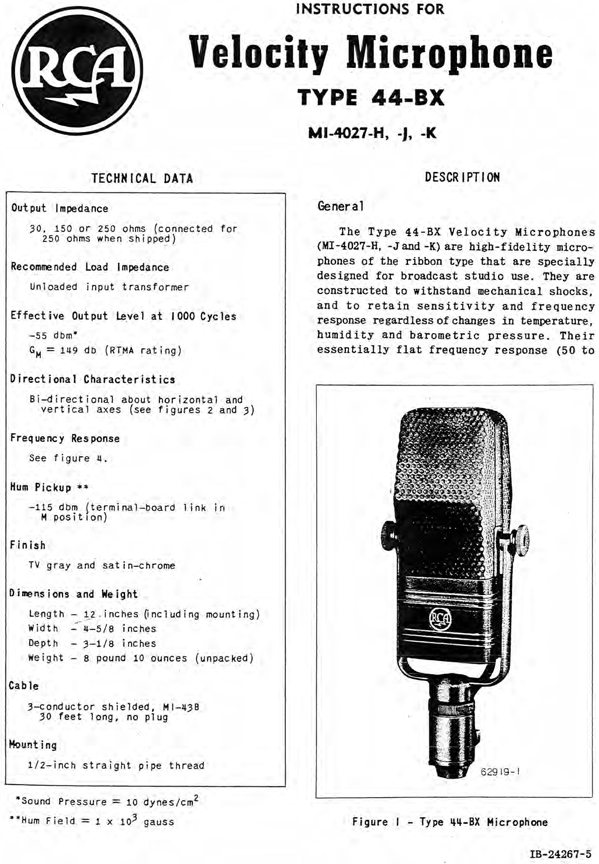
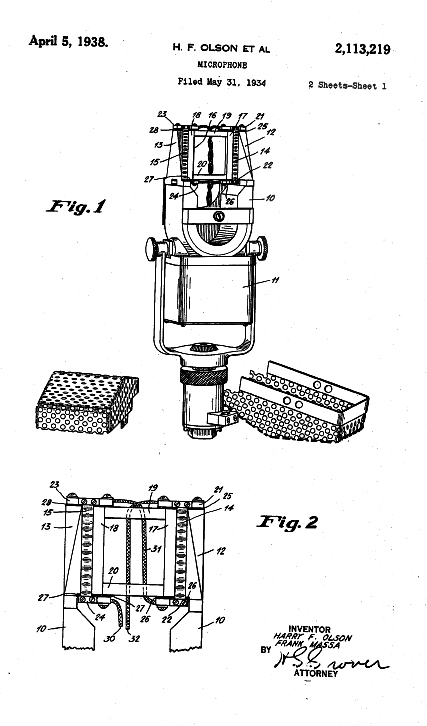
RCA 44BX Microphone
Specifications and US Patent No. 2,113,219
Click to Enlarge
The feed went offstage to a mixer and then to a CBS truck in the alley. The engineers on site did not control the mix and thus the settings were the same for each song. There was no attempt to bring out individual soloists or to make adjustments appropriate to the unique nature of each song. From the truck, the feed was then sent by broadcast-quality telephone line to the CBS master control room downtown who then patched it on to Harry Smith's Artist's Recording Studio. There, acetate records were cut but each was limited to 8 minutes 45 seconds. In order to capture the entire live concert, two record cutting turntables had to be used in relays. Smith only had two turntables, so he "subcontracted" the job to Raymond Scott's Universal Recording Studio. Scott received the same feed from CBS master as did Smith. Thus, the concert was recorded on four different cutting machines --- alas, synchronization had not been invented and half the recordings are at a slightly different speed than the others and it was virtually impossible to attain continuity by "splicing" the records together using analogue methods. (This was alleviated in the 1990s when Phil Schaap brought digital technology to the problem, as discussed below)
Meanwhile, in the CBS studio, a master was cut on aluminum studio transcription discs. The discs had much higher quality but were useless for commercial use because:
- Goodman had used a number of people from other bands and it proved almost impossible to resolve the contractual issues
- The American Federation of Musicians demanded prohibitively high royalties for playing transcribed (recorded) music on the radio. The purpose of this was to provide employment for large numbers of musicians since all performances were "live". It was not until 1947 that the Supreme Court invalidated prohibitions on broacasting recorded material.
Since they couldn't be turned into salable records or broadcast over the air, these transcription discs were of academic interest only. Eventually they were filed away and more-or less forgotten. They waited 60 years to be accidentaly found in 1998.
Benny Goodman shelved the idea of issuing a recording from his acetates due to the same contract issues that stymied CBS. Since Benny was busy with lots of other projects, his set of acetates also drifted into obscurity. In 1950, the acetates were discovered by Rachel Speiden (Benny's sister-in-law) when she took over Benny's New York apartment and cleaned out the closets. Needless to say, the quality had degraded even further.
With heroic engineering by Harvard physicist Bill Savory, it was possible to restore about 75% of the concert. Benny was amused when he found out that he had come in sixteen bars late on "Dizzy Spells."
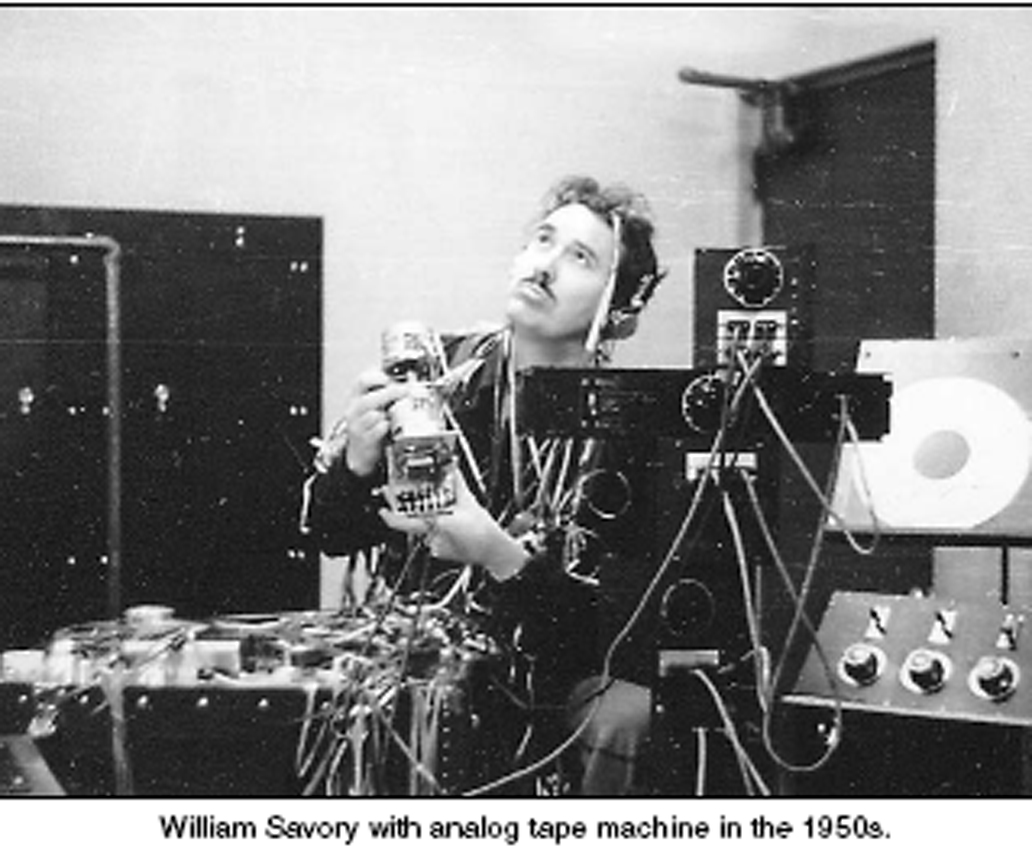
He was one of the "fathers" of the 33 1/3 LP record format
Click to Enlarge
Combining Savory's genius with application of massive legal talent, the re-engineered version was issued in 1950 and became one of the first of the 33-1/3 rpm long play records to sell over a million copies. A 1985 rework of this recording using Helen Ward's additional acetates obtained by producer Phil Schaap is available on CD. In early January of 1998, it was announced that the aluminum studio masters had been rediscovered, allowing the entire concert to be reproduced with much better fidelity. This Four CD Set is said by many to have the best sound of all the recordings.
The 1938 Concert has continued to reverberate in retrospectives and re-enactments. Here are a few.
The PBS Special on Benny Goodman
This is a film of Benny Goodman's Career, taken from a 1985 PBS Program.
Scenes from the 1938 Concert, particularly "Sing,Sing,Sing" are in the video clip.
Sid Caesar's Revisit of the 1938 Concert
In the mid 1950s, Sid Caesar (himself an accomplished saxophonist) devoted one of his programs to a re-creation of the 1938 Carnegie Hall Concert. He was able to get together a large number of the musicians who appeared in the original concert. There is a little comedy, poking fun at the jitterbugs in the audience who danced in the aisles. Through the magic of YouTube, here are two segments from that show:
Part Two
The 1998 Re-enactment in DC
We were at the recreation of the Goodman Carnegie Hall concert presented by the New Columbia Swing Band on January 16, 1998, exactly sixty years after the original. Sue Fedor wrote this review:
From: Sue Fedor
Steve and I attended the New Columbia Swing Orchestra's recreation of Benny Goodman's 1938 Carnegie Hall Concert at the Duke Ellington School Auditorium. I found out, only that morning by reading the paper that only part of the concert would be reproduced, but that Brooks Tegler would be doing the entire concert in Annapolis on Sunday. It was too late to change our plans, however.
The band never projected better than it did on a stage with real acoustic baffling. If Frank Goldseth is serious about not amplifying the musicians, he'd do well to invest in some portable baffles. They really do the trick. However, a myriad of little problems combined to fill the concert with distractions: a busted microphone on the lead singer, musicians who were a tad out of synch, soloists with no energy...etc...
By the time they got to "Sing, Sing, Sing", however, the band kicked into gear. My personal highlight was "I've Got Rhythm" where Brooks Tegler, on drums and the vibraphone player played a mean duet: vibraphone with a cowbell counter point. Brooks' plays his entire drumset (genuine Gene Krupa), from the rims of the drums themselves (which sound like bells), to the squeak his chair makes when he bounces on the bass pedal.
Much like the original concert, there has been great tension between Brooks Tegler and Frank Goldseth--paralleling the tension that Goodman had with Krupa. It's hard to rein in two talented musicians with very strong opinions and high standards of perfection. We sat in the front row during the concert, where, it was very apparent, that all the musicians involved worked hard on the music and were really having fun. Ultimately, that's what counts.
Now onto dancing....At the original 1938 concert, there WAS dancing (and clapping, and shouting, and young men rushing the stage), much to the chagrin of both Goodman and the critics. It is often rumored that Goodman was not fond of dancers. From what I've read, I think that while he was willing to play for all sorts of audiences, he preferred to keep the dancers in the ballroom and the concert goers in their seats. Young men, nicknamed "ickies", would hang out around the edge of the stage and gyrating, bouncing, and wagging their heads with the music....the forerunners of "headbangers", if you will. Goodman especially hated these guys.
We danced on the sides down in front and in the aisles. The floor was concrete covered with low nap industrial carpeting. We all wore leather bottomed shoes. Frank G. and the crowd were very appreciative. During "Stompin' at the Savoy", we broke into a Shim Sham, once I flew over to the other side of the house to accompany Frank M. and gang. It was really neat to shim sham to this version. All the phrase lengths are the same, but their order was a bit different than on the recording. This made the moves "feel" different, since we were doing them to a different melody line. This made me, at least, emphasize the steps in a different way or even synchopate a bit. The song was also three times longer than we were used to...so even after starting late, we were able to complete the whole routine and dance.
In 1938, Goodman featured Count Basie on piano and Lionel Hampton on vibes. It was revolutionary to see black and white musicians together in this sort of venue. It would still be some time before the integration that was common in Jazz would be acceptable elsewhere. Only a year later would Marion Anderson be denied a concert at the DAR Constitution Hall in Washington, DC. Of course, she would go on to sing to a larger audience at a much better venue: the Lincoln Memorial.
While the Carnegie Hall patrons basked in the afterglow of having seen the "best musicians in Jazz," the "best musicians in Jazz" took cabs uptown to the Savoy Ballroom, where a much anticipated battle of the bands was taking place. Chick Webb vs. Count Basie. THAT'S where the best musicians in Jazz really were. Playing for dancers. No room for "ickies" or folks paying $15 to sit in cushy velvet seats.
This is the review that appeared in The Washington Post --- there is also a review in the local throwaway, the Northwest Current, in which Steve, Sue, the Engels, and others are generally misquoted.
New Columbia Swing Orchestra At Duke Ellington School
At the Duke Ellington School of the Arts on Friday night, the New Columbia Swing Orchestra celebrated the 60th anniversary of Benny Goodman's Carnegie Hall jazz concert. It did so by vibrantly re-creating much of the music performed on that fabled evening in 1938, back when a box seat would have cost you $2.75 [Editor's Note: Adjusted for inflation, this is $42.84 in 1998 dollars; the 85 cent balcony seats would be about $13.24 -- sorry, in my note last Friday, I guessed at $15.]
Doubtless some members of the audience were in a mood to reminisce about the music of their youth, while a younger contingent of swing-era enthusiasts clearly came to dance the night away. The performance, though, offered listeners much more than a whiff of nostalgia and a danceable beat. For starters, the charts assembled for the concert by band leader and clarinetist Frank Guldseth frequently attested to Goodman's good taste and good fortune. He worked with some of the era's finest arrangers, after all, including Fletcher Henderson and Jimmy Mundy. Moreover, the big band charts and small combo jam sessions were laced with artful contributions from Guldseth, trumpeter Marc Weigel, pianist Larry Eanet and vibist John Cocuzzi, plus the now nonchalant, now explosive Gene Krupa-like drumming of Brooks Tegler.
Unfortunately, the orchestra might have been better off using
sound equipment available during Goodman's glory days. Frequent
problems with the stage monitors and microphones robbed the music
of some of its luster and undermined John Tegler's informative
narration and vocalist Dana Sanders's performance of "Loch
Lomond." A fine singer with a voice particularly well suited
to the material, Sanders later got a chance to fully display her
talent on "Bei Mir Bist Du Schoen."
--- Mike Joyce

Counter for the Entire Website - not just this page
Home | About Lindy | 1940s Collectibles | Upcoming Events | Vintage Clothes
The Guide - Establishments - Travel - Accessories
Music | Links | Photo Gallery | Extras | Contact